



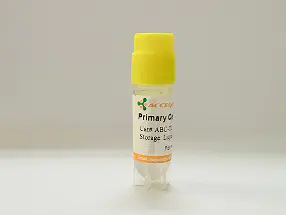
For research use only
| Cat No. | ABC-TC3230 |
| Product Type | Mouse Primary Cells |
| Cell Type | Epithelial |
| Species | C57BL/6 Mouse |
| Growth Conditions | 37 ℃, 5% CO2 |
| Source Organ | Prostate |
| Disease | Normal |
| Storage | Liquid Nitrogen |
C57BL/6 Mouse Primary Prostate Epithelial Cells from AcceGen are isolated from tissue of pathogen-free laboratory mice.
C57BL/6 Mouse Prostate Epithelial Cells, also known as murine prostate epithelial cells, are derived from the prostatic epithelium of C57BL/6 mice. These cells form the lining of prostate ducts and are responsible for secreting components of seminal fluid. Prostate epithelial cells are involved in tissue homeostasis, hormone responsiveness, and epithelial-stromal interactions. They are commonly used to study prostate development, androgen signaling, inflammation, and prostate cancer progression. These cells express cytokeratin markers such as CK8 and CK18. Repeated freeze-thaw cycles should be strictly avoided to preserve cell function and morphology. The cells undergo rigorous screening and isolation procedures, and are rigorously tested to ensure they are free of contamination from mycoplasma, fungi, yeast, and bacteria.
| Product Code | C57BL/6 Mouse Prostate Epithelial Cells, Mouse Prostate Epithelial Cells, Prostate Epithelial Cells, Epithelial Cells, EpiCs, C57BL/6 Prostate EpiCs |
| Species | C57BL/6 Mouse |
| Cat.No | ABC-TC3230 |
| Product Category | Primary Cells |
| Size/Quantity | 1 vial |
| Cell Type | Epithelial |
| Growth Mode | Adherent |
| Shipping Info | Dry Ice |
| Growth Conditions | 37 ℃, 5% CO2 |
| Source Organ | Prostate |
| Disease | Normal |
| Biosafety Level | 1 |
| Storage | Liquid Nitrogen |
| Product Type | Mouse Primary Cells |
| Quality Control | All cells test negative for mycoplasma, bacteria, yeast, and fungi. |
C57BL/6 Mouse Prostate Epithelial Cells serve as a reliable in vitro model for studying prostate gland biology, androgen signaling, and epithelial cell differentiation. These cells are widely used in investigations of prostate development, inflammatory responses, and the pathogenesis of prostate-related diseases, including benign prostatic hyperplasia and prostate cancer. Researchers also use them to screen hormone-based therapies and explore epithelial-stromal interactions within the prostate microenvironment.
When you publish your research, please cite our product as “AcceGen Biotech Cat.# XXX-0000”. In return, we’ll give you a $200 coupon. Simply click here and submit your paper’s PubMed ID (PMID).