



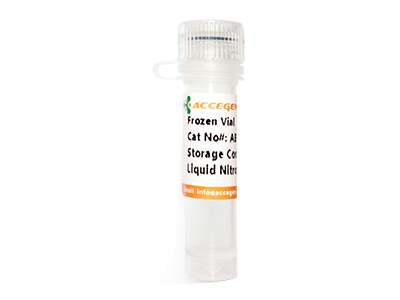
Primary Cells

C57BL/6 Mouse Type II Alveolar Epithelial Cells

  • For research use only

Cat No.

ABC-H0084X

Product Type

Mouse Primary Cells

Cell Type

Epithelial

Species

C57BL/6 Mouse

Growth Conditions

37 ℃, 5% CO2

Source Organ

Alveolar

Disease

Normal

Storage

Liquid Nitrogen

Utilize C57BL/6 Mouse Type II Alveolar Epithelial Cells to investigate pulmonary surfactant production and alveolar repair in lung-related studies.

Product Image

Description

C57BL/6 Mouse Type II Alveolar Epithelial Cells are primary cells isolated from the lung tissue of C57BL/6 mice, the gold-standard strain for pulmonary research. The cells are cryopreserved after primary culture and typically exhibit limited passaging capacity. They constituting 2-5% of the alveolar surface area. These cuboidal, surfactant-producing cells express hallmark markers like pro-SP-C, SP-B, ABCA3, and LAMP3, and function as progenitors for Type I alveolar cells (AT1) during lung repair. AT2 cells exhibit lamellar body structures visible under electron microscopy, essential for surfactant storage and secretion. They play critical roles in maintaining alveolar integrity, immune modulation, and regeneration and are central to studying pulmonary fibrosis, acute respiratory distress syndrome (ARDS), COPD, and surfactant deficiency disorders. Their ability to self-renew and differentiate makes them invaluable for lung stem cell biology research.

Species

C57BL/6 Mouse

Cat.No

ABC-H0084X

Product Category

Primary Cells

Size/Quantity

1 vial

Cell Type

Epithelial

Growth Mode

Adherent

Shipping Info

Dry Ice

Growth Conditions

37 ℃, 5% CO2

Source Organ

Alveolar

Disease

Normal

Biosafety Level

1

Storage

Liquid Nitrogen

Product Type

Mouse Primary Cells

Quality Control

All cells test negative for mycoplasma, bacteria, yeast, and fungi.

Application

  • C57BL/6 Mouse AT2 cells are widely used to model lung injury, fibrosis (e.g., bleomycin-induced), and infectious diseases (e.g., influenza, COVID-19). They are ideal for studying surfactant metabolism, epithelial barrier function, and host-pathogen interactions. Applications include drug screening for pulmonary therapies, toxicity testing (e.g., nanoparticles, pollutants), and regenerative medicine (e.g., organoid cultures). Their role in alveolar repair also makes them key for investigating stem cell-based interventions in chronic lung diseases.

Citation

When you publish your research, please cite our product as “AcceGen Biotech Cat.# XXX-0000”. In return, we’ll give you a $200 coupon. Simply click here and submit your paper’s PubMed ID (PMID).

Frequently Asked Questions

  • What is mouse epithelium?

    Mouse epithelium is a layer of tightly connected epithelial cells that lines various surfaces and cavities in the mouse, including the respiratory, digestive, and urinary tracts. In the lungs, alveolar epithelial cells facilitate gas exchange and maintain tissue integrity.

Inquiring C57BL/6 Mouse Type II Alveolar Epithelial Cells

We know how valuable your research is to you, but are you wondering what you can expect to pay for quick accurate results every time? Fill out a request in the form below and we’ll get back to you within 24 hours with a quote.
High Viability
To succeed in cell culture
Precision and Reliability
To support a consistent result
Customization Options
Tailed to your research

Tags

AcceGen Scroll Top Button