



For research use only
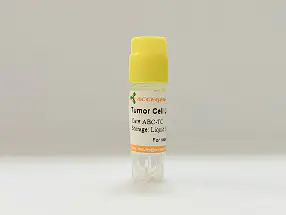
| Cat No. | ABC-TC0104 |
| Product Type | Human Bone Cancer Cell Lines |
| Species | Human |
| Growth Conditions | 37 ℃, 5% CO2 |
| Source Organ | Pleural Effusion |
| Disease | Ewing Sarcoma |
| Product Code | CADO-ES-1; Cado-ES-1; CADO ES1; CADOES1; CADO-ES; Cado-ES; ESCADO1 |
CADO-ES1 cell line is a rare Ewing sarcoma model used in oncology research for tumorigenesis, drug screening, and molecular pathway investigation.
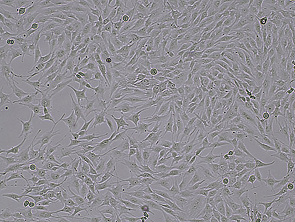
CADO-ES1 is a human Ewing’s sarcoma cell line established from the pleural effusion of a 19-year-old female patient with metastatic Ewing’s sarcoma. This line displays round to spindle-shaped morphology with loosely adherent growth properties in culture. Cytogenetic analysis confirms the presence of t(11;22)(q24;q12) chromosomal translocation, resulting in the formation of the EWS-FLI1 fusion gene—a hallmark genetic aberration of Ewing’s sarcoma that contributes to oncogenic transformation and cell proliferation. CADO-ES1 cells strongly express CD99 on the cell surface and show high levels of EWS-FLI1 mRNA and protein, supporting their identity and functional relevance. The cells are tumorigenic in immunodeficient mice, forming small, localized masses with limited invasive properties. The cells undergo rigorous screening and isolation procedures, and are rigorously tested to ensure they are free of contamination from HIV-1, HBV, HCV, Syphilis, Mycoplasma, Fungi, Yeast, and Bacteria.
| Product Code | CADO-ES-1; Cado-ES-1; CADO ES1; CADOES1; CADO-ES; Cado-ES; ESCADO1 |
| Species | Human |
| Cat.No | ABC-TC0104 |
| Product Category | Tumor Cell Lines |
| Size/Quantity | 1 vial |
| Growth Mode | Adherent or Semi-adherent |
| Shipping Info | Dry Ice |
| Growth Conditions | 37 ℃, 5% CO2 |
| Source Organ | Pleural Effusion |
| Disease | Ewing Sarcoma |
| Biosafety Level | 1 |
| Storage | Liquid Nitrogen |
| Product Type | Human Bone Cancer Cell Lines |
CADO-ES1 cells serve as a robust preclinical model for studying the molecular pathogenesis of Ewing’s sarcoma, particularly the oncogenic activity of the EWS-FLI1 fusion protein. They are widely used in drug screening platforms targeting fusion-driven transcriptional networks, epigenetic dysregulation and fusion-specific vulnerabilities. Additionally, the cell line provides a reliable system for evaluating new chemotherapeutic agents, gene silencing techniques, and immunotherapeutic approaches in pediatric sarcoma research.
When you publish your research, please cite our product as “AcceGen Biotech Cat.# XXX-0000”. In return, we’ll give you a $200 coupon. Simply click here and submit your paper’s PubMed ID (PMID).