



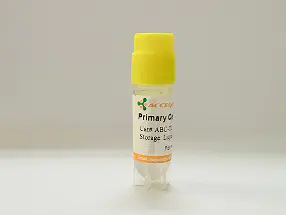
For research use only
| Cat No. | ABC-TC3265 |
| Product Type | Canine Primary Cells |
| Cell Type | Chondrocyte |
| Species | Canine |
| Growth Conditions | 37 ℃, 5% CO2 |
| Source Organ | Cartilage |
| Disease | Normal |
| Storage | Liquid Nitrogen |
Canine Chondrocytes (CnC) are isolated from normal canine articular cartilage.
Canine Chondrocytes (CnC) are primary cells derived from healthy articular cartilage of pathogen-free canines and are widely used in studies related to canine bone and cartilage health. Canine Chondrocytes display a rounded to polygonal morphology typical of articular chondrocytes and exhibit moderate adherence in monolayer culture when maintained in chondrocyte-specific medium. They retain the functional ability to synthesize extracellular matrix components such as collagen type II and aggrecan. The donor animals are free of musculoskeletal disease, and the tissue source is specifically the weight-bearing regions of the femoral condyle. Karyotype analysis has shown chromosomal stability during early passages. They express Sox9 and COL2A1. To ensure the quality of these primary cells, repeated freeze-thawcycles are not recommended due to the fragile nature of these cells. Each lot undergoes rigorous screening and isolation procedures, and is rigorously tested to ensure it is free of contamination from Mycoplasma, Fungi, Yeast, and Bacteria.
| Product Code | CnC, Canine Chondrocytes, Chondrocytes |
| Species | Canine |
| Cat.No | ABC-TC3265 |
| Product Category | Primary Cells |
| Size/Quantity | 1 vial |
| Cell Type | Chondrocyte |
| Growth Mode | Adherent |
| Shipping Info | Dry Ice |
| Growth Conditions | 37 ℃, 5% CO2 |
| Source Organ | Cartilage |
| Disease | Normal |
| Biosafety Level | 1 |
| Storage | Liquid Nitrogen |
| Product Type | Canine Primary Cells |
| Quality Control | All cells test negative for mycoplasma, bacteria, yeast, and fungi. |
Canine Chondrocytes serve as an essential cellular model for studying cartilage biology, osteoarthritis pathogenesis, and cartilage repair mechanisms in veterinary and translational medicine. Their phenotypic similarity to human articular chondrocytes makes them particularly useful for preclinical testing of chondroprotective agents, gene therapy vectors, and biomaterials for joint resurfacing. Additionally, they can be used to investigate cartilage metabolism and immune response in canine chondrocytes.
When you publish your research, please cite our product as “AcceGen Biotech Cat.# XXX-0000”. In return, we’ll give you a $200 coupon. Simply click here and submit your paper’s PubMed ID (PMID).