



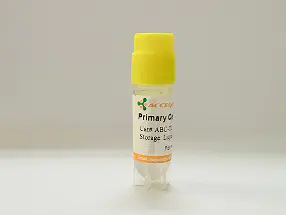
For research use only
| Cat No. | ABC-TC3271 |
| Product Type | Mouse Primary Cells |
| Cell Type | Endothelial |
| Species | CD-1 Mouse |
| Growth Conditions | 37 ℃, 5% CO2 |
| Source Organ | Aortic |
| Disease | Normal |
| Storage | Liquid Nitrogen |
CD1 Mouse Aortic Endothelial Cells from AcceGen are isolated from tissue of pathogen-free laboratory mice.
CD-1 Mouse Aortic Endothelial Cells are primary endothelial cells isolated from the aortic tissue of healthy, pathogen-free CD-1 laboratory mice both sexes included. These cells exhibit typical cobblestone morphology and express endothelial markers such as CD31 and vWF. These cells provide a reliable model for vascular biology, aortic endothelium CD-1 mouse research, and endothelial function studies. To ensure the quality of these primary cells, repeated freeze-thawcycles are not recommended due to the fragile nature of these cells. Each lot undergoes rigorous screening and isolation procedures, and is rigorously tested to ensure it is free of contamination from Mycoplasma, Fungi, Yeast, and Bacteria.
| Product Code | CD-1 Mouse Aortic Endothelial Cells, Mouse Aortic Endothelial Cells, Aortic Endothelial Cells, Endothelial Cells, ECs, CD1 AECs |
| Species | CD-1 Mouse |
| Cat.No | ABC-TC3271 |
| Product Category | Primary Cells |
| Size/Quantity | 1 vial |
| Cell Type | Endothelial |
| Growth Mode | Adherent |
| Shipping Info | Dry Ice |
| Growth Conditions | 37 ℃, 5% CO2 |
| Source Organ | Aortic |
| Disease | Normal |
| Biosafety Level | 1 |
| Storage | Liquid Nitrogen |
| Product Type | Mouse Primary Cells |
| Quality Control | All cells test negative for mycoplasma, bacteria, yeast, and fungi. |
CD-1 Mouse Aortic Endothelial Cells serve as a robust model for investigating vascular functions including cell-to-cell adhesion, endothelial migration, angiogenesis, and vascular permeability. They are well-suited for assays such as transendothelial electrical resistance (TEER) to assess barrier integrity. Furthermore, they support a broad range of molecular and cellular biology techniques including RT-PCR for gene expression, Western blotting for protein analysis, immunoprecipitation, immunofluorescent staining, and flow cytometry. Researchers can utilize these cells to study CD-1 mouse endothelial cell function in response to physiological and pathological stimuli, mechanisms of vascular inflammation, and the development of cardiovascular therapies within a murine model context.
When you publish your research, please cite our product as “AcceGen Biotech Cat.# XXX-0000”. In return, we’ll give you a $200 coupon. Simply click here and submit your paper’s PubMed ID (PMID).