



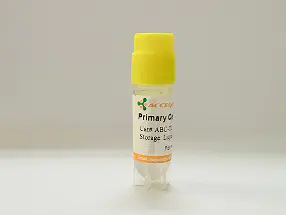
For research use only
| Cat No. | ABC-TC3298 |
| Product Type | Mouse Primary Cells |
| Cell Type | Microglia |
| Species | CD-1 Mouse |
| Growth Conditions | 37 ℃, 5% CO2 |
| Source Organ | Brain |
| Disease | Normal |
| Storage | Liquid Nitrogen |
Microglia, one of the glial cell types in the CNS, is an important integral component of the neuro-glial cell network.
CD-1 Mouse Microglia are primary immune cells isolated from the brain parenchyma of neonatal CD-1 mice free from neurological disease. These resident CNS macrophages exhibit typical ramified morphology, strong adherence, and maintain intrinsic functions including immune surveillance, synaptic pruning, and support of neurodevelopment. They provide a physiologically relevant and consistent model for studies of central nervous system immunity, neuroinflammation, neurodevelopment, and neuron-microglia interactions, supporting mechanistic research and preclinical applications. To ensure the quality of these primary cells, repeated freeze-thawcycles are not recommended due to the fragile nature of these cells. Each lot undergoes rigorous screening and isolation procedures, and is rigorously tested to ensure it is free of contamination from Mycoplasma, Fungi, Yeast, and Bacteria.
| Product Code | CD-1 Mouse Microglia, Mouse Microglia, Microglial Cells, Microglia, MGs, CD-1 MGs |
| Species | CD-1 Mouse |
| Cat.No | ABC-TC3298 |
| Product Category | Primary Cells |
| Size/Quantity | 1 vial |
| Cell Type | Microglia |
| Growth Mode | Adherent |
| Shipping Info | Dry Ice |
| Growth Conditions | 37 ℃, 5% CO2 |
| Source Organ | Brain |
| Disease | Normal |
| Biosafety Level | 1 |
| Storage | Liquid Nitrogen |
| Product Type | Mouse Primary Cells |
| Quality Control | All cells test negative for mycoplasma, bacteria, yeast, and fungi. |
CD-1 Mouse Microglia serve as a reliable in vitro model for neuroinflammation, neurodegeneration, and CNS immune response studies. They are commonly used in assays investigating cytokine production, phagocytic activity, and neuron-glia interactions. Suitable for RT-PCR, ELISA, immunocytochemistry, Western blotting, live-cell imaging, and co-culture with neurons or astrocytes. They are also widely applied in Alzheimer’s, Parkinson’s, and traumatic brain injury research, offering a robust platform for drug discovery and mechanistic studies.
When you publish your research, please cite our product as “AcceGen Biotech Cat.# XXX-0000”. In return, we’ll give you a $200 coupon. Simply click here and submit your paper’s PubMed ID (PMID).