



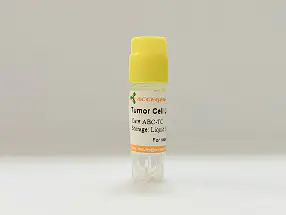
For research use only
| Cat No. | ABL-TC0127 |
| Product Type | Human Uterine Cancer Cell Lines |
| Cell Type | Epithelial |
| Species | Human |
| Growth Conditions | 37 ℃, 5% CO2 |
| Product Code | Chang liver; Chang Liver (HeLa derivative); Chang Cells; Chang; CHL |
Chang liver is a popular cell line in labs, but its history is complex. Understand its quirks before using it in your experiments.
Chang Liver is a human liver cell line originally reported to be derived from normal liver tissue. However, subsequent studies using isoenzyme analysis, HeLa marker chromosomes, and DNA fingerprinting demonstrated that this cell line was established through contamination with HeLa cells. These polygonal cells grow adherently and display a typical epithelial cobblestone morphology, with sustained Chang Liver cell proliferation under standard culture conditions. Chang Liver cells are aneuploid and exhibit chromosomal abnormalities closely resembling those of HeLa cells, reflecting distinctive patterns of Chang Liver gene regulation associated with their transformed genetic background. Although they express liver-associated markers such as albumin and cytokeratins, their metabolic enzyme activity remains limited compared with primary hepatocytes. Owing to their unique genetic characteristics and disputed provenance, Chang Liver cells are commonly applied in Chang Liver biochemical assays, including toxicology, virology, and cancer-related studies, as well as investigations of cellular responses to Chang Liver growth factors. Nevertheless, careful interpretation of experimental results is required due to their HeLa-derived genomic features.
| Product Code | Chang liver; Chang Liver (HeLa derivative); Chang Cells; Chang; CHL |
| Species | Human |
| Cat.No | ABL-TC0127 |
| Product Category | Tumor Cell Lines |
| Size/Quantity | 1 vial |
| Cell Type | Epithelial |
| Growth Mode | Adherent |
| Shipping Info | Dry Ice |
| Growth Conditions | 37 ℃, 5% CO2 |
| Biosafety Level | 1 |
| Storage | Liquid Nitrogen |
| Product Type | Human Uterine Cancer Cell Lines |
Chang Liver is a human cell line historically misidentified as a liver-derived model and widely employed in studies of hepatic metabolism, toxicology, and cell biology. In 1974, cytogenetic and isoenzyme analyses confirmed its identity as a HeLa cell derivative, rendering it unsuitable as a true liver model. Despite this misclassification, Chang Liver cells remain in use for various biomedical applications, including virology, biochemical assays, and liver-related studies where hepatic specificity is not critical. The case of Chang Liver highlights the importance of rigorous cell line authentication to ensure experimental validity and reproducibility in research.
When you publish your research, please cite our product as “AcceGen Biotech Cat.# XXX-0000”. In return, we’ll give you a $200 coupon. Simply click here and submit your paper’s PubMed ID (PMID).