




For research use only
| Cat No. | ABC-TC1320 |
| Product Type | Human Uterine Cancer Cell Lines |
| Cell Type | Epithelial-like |
| Species | Human |
| Growth Conditions | 37 ℃, 5% CO2 |
| Source Organ | Uterus |
| Product Code | Ishikawa, Ishikawa Cells, Ishikawa Endometrial Adenocarcinoma Cell Line, Human Endometrial Cancer Cells, ISHIKAWA |
Ishikawa Endometrial Cells are hormone-responsive and support studies on endometrial differentiation, estrogen signaling, and uterine carcinoma.
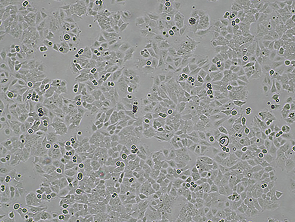
The Ishikawa cell line is a human endometrial adenocarcinoma cell line established from a 39-year-old woman. These epithelial-like cells exhibit a mosaic monolayer growth pattern and tend to pile, mirroring the structure of the original tumor. Ishikawa cells express estrogen (ER) and progesterone receptors (PR), making them a gold standard model for hormone-responsive endometrial cancer research. Ishikawa cells retain endometrial-like features, including the ability to respond to estradiol and progestins by modulating cell proliferation and gene expression. Genetically, Ishikawa cells display a diploid chromosomal range with a recurrent t(9;14) translocation and harbor mutations in TP53 and POLE. They express key epithelial markers, including cytokeratin, E-cadherin, and MUC1. They demonstrate tumorigenicity in nude mice, forming well-differentiated adenocarcinomas upon transplantation. Their stable growth and reproducibility make them ideal for long-term culture and drug screening.
| Product Code | Ishikawa, Ishikawa Cells, Ishikawa Endometrial Adenocarcinoma Cell Line, Human Endometrial Cancer Cells, ISHIKAWA |
| Species | Human |
| Cat.No | ABC-TC1320 |
| Product Category | Tumor Cell Lines |
| Size/Quantity | 1 vial |
| Cell Type | Epithelial-like |
| Growth Mode | Adherent |
| Shipping Info | Dry Ice |
| Growth Conditions | 37 ℃, 5% CO2 |
| Source Organ | Uterus |
| Biosafety Level | 1 |
| Storage | Liquid Nitrogen |
| Product Type | Human Uterine Cancer Cell Lines |
Ishikawa cells are widely used in reproductive biology and molecular research as a reliable in vitro model for assessing estrogenic activity. They facilitate evaluation of estrogen agonists and antagonists on cell proliferation, gene, and protein expression. Additionally, Ishikawa cells serve as a platform for testing anticancer drug effects by monitoring morphological and biophysical changes.
When you publish your research, please cite our product as “AcceGen Biotech Cat.# XXX-0000”. In return, we’ll give you a $200 coupon. Simply click here and submit your paper’s PubMed ID (PMID).