



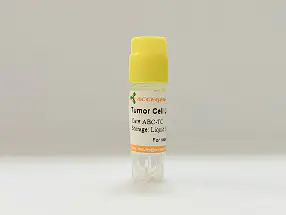
For research use only
| Cat No. | ABC-TC0136 |
| Product Type | Mouse Ovarian Cell Lines |
| Species | Hamster |
| Growth Conditions | 37 ℃, 5% CO2 |
| Product Code | CHO-SSTR1; CHO-SSR1 |
Species: hamster, Chinese female adult; Tissue: ovary; Transfected with the SSR1 somatostatin receptor; Original line: CHO-K1
CHO‑SSR1 is a genetically engineered Chinese hamster ovary (CHO) cell line expressing human somatostatin receptor 1 (SSTR1), originally cloned into parental CHO cells derived from a female Chinese hamster ovary. These epithelial-like adherent cells grow in monolayers with tight cell-cell contacts and exhibit a near‑diploid karyotype (modal chromosome number 20–22) with stable genomic integrity. They exhibit polygonal shape and demonstrate contact inhibition under confluent culture conditions. CHO‑SSR1 demonstrates robust transfection efficiency and high-level expression of SSTR1, enabling functional signaling through pertussis-toxin-sensitive inhibition of adenylate cyclase. As a non-tumorigenic line in nude mice, it supports receptor pharmacology and imaging research. STR analysis and expression profiling confirm lineage and SSTR1 expression. The cells undergo rigorous screening and isolation procedures, and are rigorously tested to ensure they are free of contamination from mycoplasma, fungi, yeast, and bacteria.
| Product Code | CHO-SSTR1; CHO-SSR1 |
| Species | Hamster |
| Cat.No | ABC-TC0136 |
| Product Category | Tumor Cell Lines |
| Size/Quantity | 1 vial |
| Shipping Info | Dry Ice |
| Growth Conditions | 37 ℃, 5% CO2 |
| Biosafety Level | 1 |
| Storage | Liquid Nitrogen |
| Product Type | Mouse Ovarian Cell Lines |
CHO‑SSR1 is an ideal model for preclinical studies of G protein–coupled receptor (GPCR) pharmacology, especially somatostatin analogs and inhibitors. Its stable SSTR1 expression and functional receptor-coupled signaling enable ligand-binding assays, second messenger quantification, and receptor internalization studies. The line supports high‑affinity radioligand binding, high‑throughput screening of novel agonists/antagonists, and development of diagnostic imaging tracers. Additionally, CHO‑SSR1 can be used in biosensor development and cell-based signal transduction assays. Its high transfection efficiency also makes it well-suited for co-expression or mutagenesis studies of GPCR signaling partners and downstream effectors.
When you publish your research, please cite our product as “AcceGen Biotech Cat.# XXX-0000”. In return, we’ll give you a $200 coupon. Simply click here and submit your paper’s PubMed ID (PMID).