


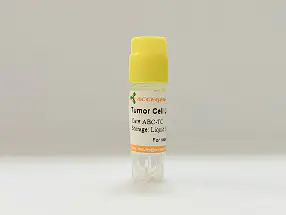
For research use only
| Cat No. | ABC-TC0192 |
| Product Type | Human Ovarian Cancer Cell Lines |
| Species | Human |
| Growth Conditions | 37 ℃, 5% CO2 |
| Source Organ | Ovary |
| Disease | Ovarian Mucinous Adenocarinoma |
| Product Code | COV-644 |
COV644 Cell Line is ideal for modeling mucinous ovarian carcinoma, enabling studies on tumor progression, epithelial markers, and drug sensitivity.
COV644 is derived from a human ovarian epithelial-mucinous carcinoma, specifically isolated from a primary solid tumor, indicating its origin from malignant ovarian epithelial cells. This adherent cell line exhibits polygonal and fusiform (spindle-shaped) morphology, typical of endothelial-like and fibroblast-like growth properties in culture. Karyotype analysis of the cell line reveals a modal chromosome number of 58. The COV644 cells express CREG2, WNT1, SNAPIN, and WNT10B. Each lot undergoes rigorous screening and isolation procedures, and is rigorously tested to ensure it is free of contamination from HIV-1, HBV, HCV, Syphilis, Mycoplasma, Fungi, Yeast, and Bacteria.
| Product Code | COV-644 |
| Species | Human |
| Cat.No | ABC-TC0192 |
| Product Category | Tumor Cell Lines |
| Size/Quantity | 1 vial |
| Growth Mode | Adherent |
| Shipping Info | Dry Ice |
| Growth Conditions | 37 ℃, 5% CO2 |
| Source Organ | Ovary |
| Disease | Ovarian Mucinous Adenocarinoma |
| Biosafety Level | 1 |
| Storage | Liquid Nitrogen |
| Product Type | Human Ovarian Cancer Cell Lines |
COV644 can be used to investigate tumorigenic mechanisms, including proliferation, invasion, and resistance to chemotherapy (e.g., platinum-based drugs). Its ability to grow in soft agar makes it suitable for assessing anchorage-independent growth, a key feature of malignant transformation. It can also be used to examine cell-matrix interactions and metastatic pathways, particularly in peritoneal dissemination, a common progression route in ovarian cancer.
When you publish your research, please cite our product as “AcceGen Biotech Cat.# XXX-0000”. In return, we’ll give you a $200 coupon. Simply click here and submit your paper’s PubMed ID (PMID).