



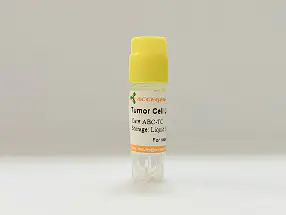
For research use only
| Cat No. | ABC-TC0203 |
| Product Type | Human Nerve Tumors Cell Lines |
| Species | Human |
| Growth Conditions | 37 ℃, 5% CO2 |
| Source Organ | Brain |
| Disease | Medulloblastoma |
| Product Code | DAOY; D324 Med; D-324 Med; D324 MED; D-324MED; D324 |
Use Daoy to investigate medulloblastoma progression, pediatric brain tumor biology, and cerebellar cell behavior in posterior fossa-derived models.
The Daoy cell line was isolated from the cerebellum of a 4-year-old white male diagnosed with desmoplastic cerebellar medulloblastoma. Morphologically, Daoy cells exhibit a polygonal, epithelial-like appearance and grow as an adherent monolayer in culture. Genomic analysis of the Daoy cell line reveals gene deletions, mutations, and other genetic alterations. Highly expressed genes in the Daoy cell line include CXORF67, RNF20, SLC25A21, and KSR1. Each lot undergoes rigorous screening and isolation procedures, and is rigorously tested to ensure it is free of contamination from HIV-1, HBV, HCV, Syphilis, Mycoplasma, Fungi, Yeast, and Bacteria.
| Product Code | DAOY; D324 Med; D-324 Med; D324 MED; D-324MED; D324 |
| Species | Human |
| Cat.No | ABC-TC0203 |
| Product Category | Tumor Cell Lines |
| Size/Quantity | 1 vial |
| Shipping Info | Dry Ice |
| Growth Conditions | 37 ℃, 5% CO2 |
| Source Organ | Brain |
| Disease | Medulloblastoma |
| Biosafety Level | 1 |
| Storage | Liquid Nitrogen |
| Product Type | Human Nerve Tumors Cell Lines |
Daoy is widely used in neuro-oncology research, particularly for studying medulloblastoma (MB), the most common malignant pediatric brain tumor. Due to its desmoplastic subtype origin, Daoy serves as a key model for investigating tumorigenesis, drug resistance mechanisms, and novel therapeutic strategies. It is frequently employed in preclinical drug screening, including studies on curcumin, PI3K/Akt/mTOR inhibitors, and autophagy modulators, to evaluate potential anti-cancer agents.
When you publish your research, please cite our product as “AcceGen Biotech Cat.# XXX-0000”. In return, we’ll give you a $200 coupon. Simply click here and submit your paper’s PubMed ID (PMID).