



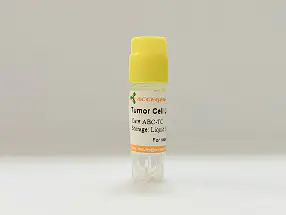
For research use only
| Cat No. | ABC-TC0231 |
| Product Type | Mouse Breast Cancer Cell Lines |
| Species | Mouse |
| Growth Conditions | 37 ℃, 5% CO2 |
| Product Code | EAT cell, EAT cell line |
The species was confirmed by Real-Time PCR.
EAT cell line is an Ehrlich ascites tumor cell line originally isolated from mouse breast tissue of a female Mus musculus with malignant breast neoplasm. This cell line exhibits epithelial-like morphology and demonstrates adherent growth properties in vitro culture conditions. Cytogenetic analysis confirms that EAT cells have a diploid chromosome composition, with a consistent chromosomal number of 2n=40. This cell line demonstrates both tumorigenic potential and metastatic capability in appropriate model systems. The cells undergo rigorous screening and isolation procedures, and are rigorously tested to ensure they are free of contamination from Mycoplasma, Fungi, Yeast, and Bacteria.
| Product Code | EAT cell, EAT cell line |
| Species | Mouse |
| Cat.No | ABC-TC0231 |
| Product Category | Tumor Cell Lines |
| Size/Quantity | 1 vial |
| Shipping Info | Dry Ice |
| Growth Conditions | 37 ℃, 5% CO2 |
| Biosafety Level | 1 |
| Storage | Liquid Nitrogen |
| Product Type | Mouse Breast Cancer Cell Lines |
EAT cells function as a murine carcinoma model, specifically utilized to investigate fundamental tumor proliferation mechanisms and chemotherapy resistance pathways. They provide a robust platform enabling highly reproducible in vivo-mimetic drug efficacy screening procedures and detailed tumor-host interaction analyses. This integrated system further facilitates precise metastasis quantification within peritoneal dissemination models and comprehensive immunomodulator testing, crucially accelerating targeted therapeutic development initiatives for aggressive carcinomas.
When you publish your research, please cite our product as “AcceGen Biotech Cat.# XXX-0000”. In return, we’ll give you a $200 coupon. Simply click here and submit your paper’s PubMed ID (PMID).