



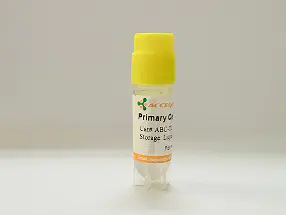
For research use only
| Cat No. | ABC-TC3419 |
| Product Type | Other Animal Primary Cells |
| Cell Type | Skeletal Muscle Cell |
| Species | Feline |
| Growth Conditions | 37 ℃, 5% CO2 |
| Source Organ | Muscle |
| Disease | Normal |
| Storage | Liquid Nitrogen |
Feline Skeletal Muscle Cells (FSkMC) are isolated from the limbal skeletal muscle.
Feline Skeletal Muscle Cells (FSMCs) are predominantly derived from skeletal muscle tissues in regions such as the limbs or tongue of cats. Morphologically, these cells exhibit a long spindle shape, grow adherently, and possess typical characteristics of skeletal muscle cells. They are capable of expressing α-actin. Functionally, FSMCs are responsible for voluntary movement and posture maintenance, and contribute to metabolic regulation. These cat cells play an important metabolic role through GLUT4-mediated glucose uptake and mitochondrial oxidative metabolism, which is regulated by muscle-relevant pathways such as AMPK and PGC-1α to support energy production and metabolic adaptation in skeletal muscle cells. Each lot undergoes rigorous screening and isolation procedures, and is rigorously tested to ensure it is free of contamination from HIV-1, HBV, HCV, Syphilis, Mycoplasma, Fungi, Yeast, and Bacteria.
| Product Code | Feline Skeletal Muscle Cells, Cat Skeletal Muscle Cells, Skeletal Muscle Cells, Myocytes, SkMCs |
| Species | Feline |
| Cat.No | ABC-TC3419 |
| Product Category | Primary Cells |
| Size/Quantity | 1 vial |
| Cell Type | Skeletal Muscle Cell |
| Growth Mode | Adherent |
| Shipping Info | Dry Ice |
| Growth Conditions | 37 ℃, 5% CO2 |
| Source Organ | Muscle |
| Disease | Normal |
| Biosafety Level | 1 |
| Storage | Liquid Nitrogen |
| Product Type | Other Animal Primary Cells |
| Quality Control | All cells test negative for mycoplasma, bacteria, yeast, and fungi. |
Feline Skeletal Muscle Cells can be used to study muscle development, differentiation, and physiological functions, aiding in gaining a deeper understanding of muscle contraction mechanisms, energy metabolism pathways, and related signal transduction networks. In the field of disease research, these cells can be utilized to simulate feline muscular diseases, such as muscular dystrophy and muscle atrophy, helping to elucidate the molecular mechanisms underlying the onset and progression of these diseases and providing targets for drug development.
When you publish your research, please cite our product as “AcceGen Biotech Cat.# XXX-0000”. In return, we’ll give you a $200 coupon. Simply click here and submit your paper’s PubMed ID (PMID).