



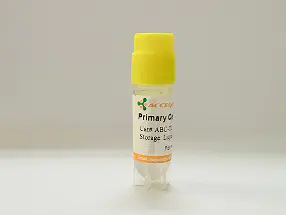
For research use only
| Cat No. | ABC-TC3442 |
| Product Type | Guinea Pig Primary Cells |
| Cell Type | Red Blood Cell |
| Species | Guinea Pig |
| Growth Conditions | 37 ℃, 5% CO2 |
| Source Organ | Blood |
| Disease | Normal |
| Storage | Liquid Nitrogen |
Guinea Pig Red Blood Cells are glutaraldehyde-stabilized and suitable for hemolytic assays, complement activity evaluation, and immunohematology research.
Guinea Pig Red Blood Cells are mainly derived from the peripheral blood of guinea pigs. Morphologically, they exhibit a characteristic biconcave discoid morphology, thinner at the center and thicker at the edges. These cells have no nucleus and mitochondria, are rich in hemoglobin, and obtain energy through the glycolytic pathway after maturation. Their function is to bind with oxygen via hemoglobin, facilitating gas exchange and maintaining blood pH balance. Additionally, the surface antigens of these cells provide useful models for studying erythrocyte membrane biology and antigen-related cellular interactions. These cells are widely used in laboratory settings to study erythrocyte properties and membrane stability in vitro. Each lot undergoes rigorous screening and isolation procedures, and is rigorously tested to ensure it is free of contamination from Mycoplasma, Fungi, Yeast, and Bacteria.
| Product Code | Guinea Pig RBCs, Guinea Pig Erythrocytes, Cavia porcellus Red Blood Cells, Cavy RBC, Guinea Pig Blood Erythrocytes |
| Species | Guinea Pig |
| Cat.No | ABC-TC3442 |
| Product Category | Primary Cells |
| Size/Quantity | 1 vial |
| Cell Type | Red Blood Cell |
| Growth Mode | Suspension |
| Shipping Info | Dry Ice |
| Growth Conditions | 37 ℃, 5% CO2 |
| Source Organ | Blood |
| Disease | Normal |
| Biosafety Level | 1 |
| Storage | Liquid Nitrogen |
| Product Type | Guinea Pig Primary Cells |
| Quality Control | All cells test negative for mycoplasma, bacteria, yeast, and fungi. |
Guinea Pig Red Blood Cells can be utilized to study the mechanism of blood group antigen-antibody reactions. In the field of drug development, they can be employed in hemolytic toxicity tests. By observing the extent of damage caused by drugs to guinea pig red blood cells, the safety of drugs can be evaluated and potential risks of blood toxicity can be avoided.
When you publish your research, please cite our product as “AcceGen Biotech Cat.# XXX-0000”. In return, we’ll give you a $200 coupon. Simply click here and submit your paper’s PubMed ID (PMID).