


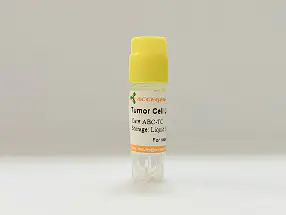
For research use only
| Cat No. | ABC-TC0281 |
| Product Type | Rat Liver Cancer Cell Lines |
| Cell Type | Epithelial |
| Species | Rattus Norvegicus |
| Growth Conditions | 37 ℃, 5% CO2 |
| Source Organ | Skin |
| Disease | Hepatoma |
| Product Code | H4-II; H-35tc2; Reuber-H-35 hepatoma tissue culture 2; Reuber H-35 tc2; Reuber H35 tc2; H-35 Reuber tc2; H35 Reuber tc2; RH-35 tc2; RH35 tc2; H-35 tc2; H35 tc2 |
Rat skin Hepatocellular carcinoma. From H-35 Reuber hepatoma induced by chemical carcinogenesis in an AxC rat (see Nat Cancer Inst Monogr 1964;13: 229).
H4II is a rat hepatocellular carcinoma cell line derived from the liver tissue of a male rat. H4II exhibits epithelial-like morphology and adherent growth properties, typically forming monolayers under standard culture conditions. This cell line displays chromosomal alterations consistent with its hepatoma origin, with a defined karyotype of 52 chromosomes. While tumorigenicity or metastatic potential in vivo has not been specifically documented, the line is widely used in liver cancer research. The cells undergo rigorous screening and isolation procedures, and are rigorously tested to ensure they are free of contamination from Mycoplasma, Fungi, Yeast, and Bacteria.
| Product Code | H4-II; H-35tc2; Reuber-H-35 hepatoma tissue culture 2; Reuber H-35 tc2; Reuber H35 tc2; H-35 Reuber tc2; H35 Reuber tc2; RH-35 tc2; RH35 tc2; H-35 tc2; H35 tc2 |
| Species | Rattus Norvegicus |
| Cat.No | ABC-TC0281 |
| Product Category | Tumor Cell Lines |
| Size/Quantity | 1 vial |
| Cell Type | Epithelial |
| Growth Mode | Adherent |
| Shipping Info | Dry Ice |
| Growth Conditions | 37 ℃, 5% CO2 |
| Source Organ | Skin |
| Disease | Hepatoma |
| Biosafety Level | 1 |
| Storage | Liquid Nitrogen |
| Product Type | Rat Liver Cancer Cell Lines |
H4II rat hepatoma cells are rat hepatoma-derived and widely used in liver metabolism and toxicology research. They serve as a model to study xenobiotic metabolism and hepatocarcinogenic processes. Their capacity for drug uptake and response profiling makes them ideal for pharmacokinetic and hepatotoxicity studies, as well as for evaluating therapeutic agents targeting hepatic diseases.
When you publish your research, please cite our product as “AcceGen Biotech Cat.# XXX-0000”. In return, we’ll give you a $200 coupon. Simply click here and submit your paper’s PubMed ID (PMID).