


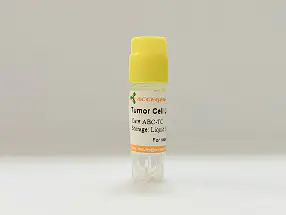
For research use only
| Cat No. | ABC-TC0049 |
| Product Type | Rat Liver Cancer Cell Lines |
| Species | Rat |
| Growth Conditions | 37 ℃, 5% CO2 |
| Disease | Hepatoma |
| Product Code | A-S-30D; AS30D |
Established in vitro from the AS-30-D tumor ascites, RAP-Test negative. The species was confirmed by Real-Time PCR
AS-30D cell line is a rat hepatoma cell line established in vitro from the ascitic fluid of a tumor-bearing rat originally inoculated with hepatocarcinogenic agents. The tumor cells were harvested from peritoneal fluid and adapted to continuous culture, exhibiting epithelial-like morphology and rapid proliferation in suspension. AS-30D cells display high mitotic activity and express liver-specific enzymes, including alpha-fetoprotein and albumin, indicating their hepatic origin. Cytogenetic analysis reveals pronounced aneuploidy and chromosomal aberrations consistent with advanced hepatocellular carcinoma. AS-30D forms tumors upon transplantation into syngeneic or immunodeficient rats and is widely used in hepatocarcinogenesis, xenobiotic metabolism, and liver-specific gene expression studies. The cells undergo rigorous screening and isolation procedures, and are rigorously tested to ensure they are free of contamination from Mycoplasma, Fungi, Yeast, and Bacteria.
| Product Code | A-S-30D; AS30D |
| Species | Rat |
| Cat.No | ABC-TC0049 |
| Product Category | Tumor Cell Lines |
| Size/Quantity | 1 vial |
| Shipping Info | Dry Ice |
| Growth Conditions | 37 ℃, 5% CO2 |
| Disease | Hepatoma |
| Biosafety Level | 1 |
| Storage | Liquid Nitrogen |
| Product Type | Rat Liver Cancer Cell Lines |
AS-30D is widely utilized in experimental hepatology and liver cancer research due to its high proliferative potential, liver-specific expression profile, and tumorigenicity in vivo. It serves as a reproducible model for investigating chemical-induced hepatocarcinogenesis, oncogene signaling pathways, and anti-cancer drug screening. The cell line is particularly valuable in studies of hepatocellular metabolism, AFP regulation, and liver-enriched transcription factors. AS-30D also supports liver-targeted gene delivery experiments, xenobiotic enzyme induction, and liver toxicity evaluation. Its capacity for in vivo tumor formation and in vitro hepatic functionality makes it an essential system for preclinical validation and mechanistic studies in rat liver oncology.
When you publish your research, please cite our product as “AcceGen Biotech Cat.# XXX-0000”. In return, we’ll give you a $200 coupon. Simply click here and submit your paper’s PubMed ID (PMID).