



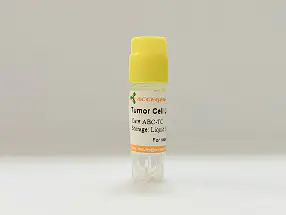
For research use only
| Cat No. | ABC-TC0291 |
| Product Type | Human Breast Cancer Cell Lines |
| Cell Type | Epithelial |
| Species | Human |
| Growth Conditions | 37 ℃, 5% CO2 |
| Product Code | HBL 100; HBL100 |
Human breast carcinoma cell
HBL-100 was originally considered a human breast epithelial cell line derived from the human breast milk. It exhibits typical epithelial morphology and adherent growth. The cell line contains SV40 large T antigen, which contributes to its immortalization. It is near-triploid with a modal chromosome number of 67. HBL-100 is generally considered non-tumorigenic at passage levels below 35 in nude mice, but forms colonies in soft agar. It is commonly used in studies of breast cancer, epithelial transformation, and toxicological screening. Despite its non-cancerous origin, it serves as a valuable model for studying early oncogenic events in vitro. The cells undergo rigorous screening and isolation procedures, and are rigorously tested to ensure they are free of contamination from HIV-1, HBV, HCV, Syphilis, Mycoplasma, Fungi, Yeast, and Bacteria.
| Product Code | HBL 100; HBL100 |
| Species | Human |
| Cat.No | ABC-TC0291 |
| Product Category | Tumor Cell Lines |
| Size/Quantity | 1 vial |
| Cell Type | Epithelial |
| Shipping Info | Dry Ice |
| Growth Conditions | 37 ℃, 5% CO2 |
| Biosafety Level | 1 |
| Storage | Liquid Nitrogen |
| Product Type | Human Breast Cancer Cell Lines |
HBL-100 human breast cells are employed in cancer biology, especially for understanding early transformation events in breast carcinogenesis. These cells serve as a non-tumorigenic model to explore epithelial cell behavior, oncogene expression, and hormone responsiveness. HBL-100 is also applicable in toxicity testing and epithelial-mesenchymal transition studies.
When you publish your research, please cite our product as “AcceGen Biotech Cat.# XXX-0000”. In return, we’ll give you a $200 coupon. Simply click here and submit your paper’s PubMed ID (PMID).