



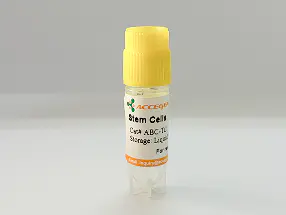
For research use only
| Cat No. | ABC-SC224Y |
| Product Type | Embryonic stem cells |
| Cell Type | Embryonic stem cells |
| Species | Human |
| Growth Conditions | 37 °C, 5% CO2 |
| Source Organ | Inner cell mass |
| Disease | Normal |
| Storage | Liquid Nitrogen |
Human Embryonic Stem Cells H1 with strong pluripotency and self-renewal, expressing SSEA-4 and TRA-1-60. Ideal for regenerative research and drug screening.
Human Embryonic Stem Cells H1 are derived from a carefully screened, early-stage human embryo with donor consent and ethical approval. Human Embryonic Stem Cells H1 is a high-quality human embryonic stem cell line with strong pluripotency and self-renewal capabilities. Under appropriate culture conditions, it can differentiate into various types of somatic cells, making it widely applicable in regenerative medicine, disease research, drug screening, and gene editing. These cells express pluripotency markers, including SSEA-4 and TRA-1-60. Each lot undergoes rigorous screening and isolation procedures, and is rigorously tested to ensure it is free of contamination from HIV-1, HBV, HCV, Syphilis, Mycoplasma, Fungi, Yeast, and Bacteria.
| Species | Human |
| Cat.No | ABC-SC224Y |
| Product Category | Stem Cells |
| Size/Quantity | 1 vial |
| Cell Type | Embryonic stem cells |
| Growth Mode | Adherent |
| Shipping Info | Dry Ice |
| Growth Conditions | 37 °C, 5% CO2 |
| Source Organ | Inner cell mass |
| Disease | Normal |
| Biosafety Level | 1 |
| Storage | Liquid Nitrogen |
| Product Type | Embryonic stem cells |
| Quality Control | All cells test negative for mycoplasma, bacteria, yeast, and fungi. |
Human Embryonic Stem Cells H1 cell line is a widely used human embryonic stem cell line known for its strong pluripotency and self-renewal capabilities. It plays a significant role in drug screening, gene editing, disease modeling, and regenerative medicine. Due to its stability and differentiation potential, H1 cells show strong potential in regenerative research, particularly for neurodegenerative diseases, cardiovascular disorders, and tissue repair. Through directed differentiation, H1 cells can generate various specific cell types.