



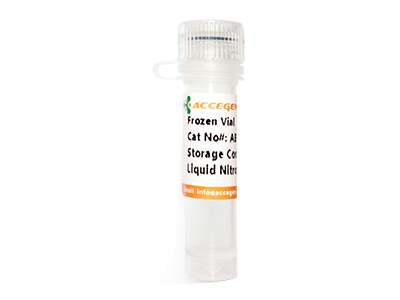
For research use only
| Cat No. | ABC-TC3486 |
| Product Type | Female Reproductive Cells |
| Cell Type | Epithelial |
| Species | Human |
| Growth Conditions | 37 ℃, 5% CO2 |
| Source Organ | Amniotic |
| Disease | Normal |
| Storage | Liquid Nitrogen |
HAEpiC from AcceGen Research Laboratories are isolated from human amniotic membranes.
Human amniotic membrane is composed of an epithelial cell layer, a basement membrane and an avascular matrix. The amniotic epithelial cells (AEC) are formed from epiblasts on the 8th day after fertilization. A probable result of their embryonic origin, AEC lack major histocompatibility complex antigens and have been used for allotranplantation to treat patients with lysosomal diseases. Studies have shown that AEC have multiple functions such as synthesis and release of acetylcholine and catecholamine as well as expressing mRNA coding for DA receptors and DA transporters. They express neuronal and glial cell marks, produce basic fibroblast growth factors and hepatocyte growth factors and transform growth factor-beta. Human AEC has been suggested as an appropriate human cell model for studying DA release and uptake processes, receptor signal transduction and exploring newly developed drugs acting at these receptors.HAEpiC from AcceGen Research Laboratories are isolated from human amniotic membranes. HAEpiC are cryopreserved at passage one and delivered frozen. Each vial contains >5×10^5 cells in 1 ml volume. HAEpiC are characterized by immunofluorescent method with antibodies to cytokeratin-18, -19 and vimentin. HAEpiC are negative for HIV-1, HBV, HCV, mycoplasma, bacteria, yeast and fungi. HAEpiC are guaranteed to further expand for 15 population doublings in the condition provided by AcceGen Research Laboratories.
| Product Code | Human Amniotic Epithelial Cells, Amnion Epithelial Cells Human, HAEpiCs, Human Amnion Derived Epithelial Cells, Amniotic Membrane Epithelial Cells |
| Species | Human |
| Cat.No | ABC-TC3486 |
| Product Category | Primary Cells |
| Size/Quantity | 1 vial |
| Cell Type | Epithelial |
| Growth Mode | Adherent |
| Shipping Info | Dry Ice |
| Growth Conditions | 37 ℃, 5% CO2 |
| Source Organ | Amniotic |
| Disease | Normal |
| Biosafety Level | 1 |
| Storage | Liquid Nitrogen |
| Product Type | Female Reproductive Cells |
| Quality Control | All cells test negative for mycoplasma, bacteria, yeast, and fungi. |
When you publish your research, please cite our product as “AcceGen Biotech Cat.# XXX-0000”. In return, we’ll give you a $200 coupon. Simply click here and submit your paper’s PubMed ID (PMID).
HAECs can be expanded for a limited number of passages, typically 3–5 generations under AcceGen’s recommended culture conditions. However, it is recommended that customers use them at a lower cell generation number to ensure that the cells can show a better state in the experiment.
HAECs can be cultured in three-dimensional systems using matrices such as Matrigel, collagen I, or decellularized amniotic membrane matrices. This approach enhances polarity and functions closer to the in vivo state. When cultured in regular plasticware, HAECs may form partial polarity, but not a fully developed basal-apical polarity. Culturing them on Transwell membranes or matrix-coated surfaces can significantly improve structural polarity.
HAECs are exclusively derived from female donors, as they are obtained from post-partum placental tissue. Immunofluorescence characterization confirms strong PCK expression, with a purity above 90%.