



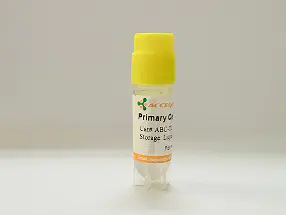
For research use only
| Cat No. | ABC-TC3451 |
| Product Type | Dermal Cells |
| Cell Type | Fibroblast |
| Species | Human |
| Growth Conditions | 37 ℃, 5% CO2 |
| Source Organ | Dermal |
| Disease | Normal |
| Storage | Liquid Nitrogen |
Human Dermal Fibroblasts-Neonatal are isolated form neonatal human skin.
Human Dermal Fibroblasts, Neonatal are primary cells isolated from neonatal foreskin or skin tissues. They exhibit the typical morphological characteristics of fibroblasts, featuring a spindle-like shape, adherent growth property, abundant cytoplasm, and a large and prominent nucleus. These cells express fibroblast markers, such as Vimentin, and are commonly used for the identification and analysis of human fibroblast markers. Functionally, they maintain the integrity and elasticity of the skin structure by secreting components including collagen, elastin, and glycosaminoglycans. Additionally, they participate in matrix remodeling, extracellular matrix secretion, and cellular signaling, serving as a valuable model for investigating mechanisms related to skin aging and fibroblast biology. Each lot undergoes rigorous screening and isolation procedures, and is rigorously tested to ensure it is free of contamination from HIV-1, HBV, HCV, Syphilis, Mycoplasma, Fungi, Yeast, and Bacteria.
| Product Code | Human Neonatal Dermal Fibroblasts, Neonatal Human Dermal Fibroblasts, NHDFs, Neonatal Skin Fibroblasts, Human Skin Fibroblasts Neonatal |
| Species | Human |
| Cat.No | ABC-TC3451 |
| Product Category | Primary Cells |
| Size/Quantity | 1 vial |
| Cell Type | Fibroblast |
| Growth Mode | Adherent |
| Shipping Info | Dry Ice |
| Growth Conditions | 37 ℃, 5% CO2 |
| Source Organ | Dermal |
| Disease | Normal |
| Biosafety Level | 1 |
| Storage | Liquid Nitrogen |
| Product Type | Dermal Cells |
| Quality Control | All cells test negative for mycoplasma, bacteria, yeast, and fungi. |
Human Dermal Fibroblasts, Neonatal can be used as an ideal model for skin biology research to explore the mechanisms of skin development, aging, and metabolism, and to help analyze the core role of fibroblasts in maintaining skin homeostasis. In terms of drug development, these cells can be used to evaluate the toxicity of drugs to skin cells, and the effects of promoting or inhibiting cell proliferation and migration, providing a key experimental basis for the development of topical skin drugs and anti-aging products.
When you publish your research, please cite our product as “AcceGen Biotech Cat.# XXX-0000”. In return, we’ll give you a $200 coupon. Simply click here and submit your paper’s PubMed ID (PMID).