




For research use only
| Cat No. | ABC-TC497S |
| Product Type | Human Pancreas Cancer Cell Lines |
| Cell Type | Epithelial |
| Species | Human |
| Growth Conditions | 37 ℃, 5% CO2 |
| Source Organ | Pancreas |
| Product Code | HUP-T3; Hu-P-T3; HuPT3; HupT3; HUPT3 |
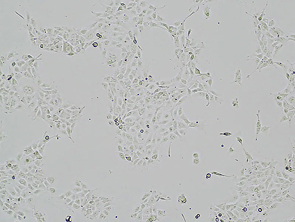
HuP-T3 pancreatic adenocarcinoma cells from 66-year-old male show KRAS, TP53, MSH6 mutations, adherent growth, tumorigenic, key for pancreatic cancer.
HuP-T3 is a human pancreatic ductal adenocarcinoma (PDAC) cell line established from the ascites of a 66-year-old male patient, exhibiting epithelial morphology and adherent growth. This model harbors hallmark PDAC mutations, including KRAS p. G12R (constitutively activating MAPK signaling), TP53 p. R282W (disrupting tumor suppression), and a frameshift mutation in MSH6 (p. K1358fs) that may confer microsatellite instability. In vivo, HuP-T3 cells form poorly differentiated adenocarcinomas with invasive growth patterns, recapitulating clinical PDAC aggressiveness. The cell line’s molecular profile—particularly its KRAS and TP53 alterations—mirrors the genomic landscape of >90% of human PDAC cases, making it a translational model for studying therapy resistance, tumor-stroma interactions, and metastatic mechanisms. HuP-T3 is further characterized by its rapid proliferation in vitro and secretion of protumorigenic factors (e.g., MMP-9, IL-8), which contribute to its utility in drug screening and microenvironment studies.
| Product Code | HUP-T3; Hu-P-T3; HuPT3; HupT3; HUPT3 |
| Species | Human |
| Cat.No | ABC-TC497S |
| Product Category | Tumor Cell Lines |
| Size/Quantity | 1 vial |
| Cell Type | Epithelial |
| Growth Mode | Adherent |
| Shipping Info | Dry Ice |
| Growth Conditions | 37 ℃, 5% CO2 |
| Source Organ | Pancreas |
| Biosafety Level | 1 |
| Storage | Liquid Nitrogen |
| Product Type | Human Pancreas Cancer Cell Lines |
The HuP-T3 cell line serves as a valuable model for pancreatic cancer research, particularly in studies focused on tumor invasion, migration, and metastasis. . It offers an effective platform to explore the molecular signaling pathways such as those involving KRAS and p53, which drive the aggressive behavior of pancreatic tumors. HuP-T3 cells are widely used in preclinical drug screening, enabling researchers to evaluate the efficacy of novel anticancer compounds and targeted therapies. Furthermore, its defined genetic alterations make it ideal for studying the cellular response to genotoxic stress, supporting the development of precision oncology strategies.
When you publish your research, please cite our product as “AcceGen Biotech Cat.# XXX-0000”. In return, we’ll give you a $200 coupon. Simply click here and submit your paper’s PubMed ID (PMID).