For research use only
| Cat No. | ABC-TC0447 |
| Product Type | Human Gastric Cancer Cell Lines |
| Cell Type | Epithelial-like |
| Species | Human |
| Growth Conditions | 37 ℃, 5% CO2 |
| Source Organ | Stomach |
| Disease | Gastric Adenocarinoma |
| Product Code | Im95; IM-95 |
The IM95 cell line is a gastric carcinoma model extensively used in gastrointestinal oncology, drug sensitivity, and cancer mechanism research.
IM95 is a human gastric adenocarcinoma tumor cell line originally established from the in situ stomach tumor tissue of a 63-year-old male Japanese patient with gastric cancer. It exhibits an epithelial-like morphology and grows as adherent monolayers in culture. IM95 has a doubling time around 25 hours and shows microsatellite instability at low levels (MSI-low). Derivatives of IM95 have been used to dissect tumor cell production of factors such as hepatocyte growth factor (HGF), vascular endothelial growth factor (VEGF), and interleukin-8 (IL-8), which are implicated in tumor proliferation and angiogenesis. As a malignant tumor model, IM95 cell line supports diverse studies in gastric cancer biology and therapeutic evaluation. The cells undergo rigorous screening and isolation procedures, and are rigorously tested to ensure they are free of contamination from HIV-1, HBV, HCV, Syphilis, Mycoplasma, Fungi, Yeast, and Bacteria.
| Product Code | Im95; IM-95 |
| Species | Human |
| Cat.No | ABC-TC0447 |
| Product Category | Tumor Cell Lines |
| Size/Quantity | 1 vial |
| Cell Type | Epithelial-like |
| Shipping Info | Dry Ice |
| Growth Conditions | 37 ℃, 5% CO2 |
| Source Organ | Stomach |
| Disease | Gastric Adenocarinoma |
| Biosafety Level | 1 |
| Storage | Liquid Nitrogen |
| Product Type | Human Gastric Cancer Cell Lines |
IM95 cells are used as an in vitro model of human gastric adenocarcinoma to investigate tumor cell proliferation, angiogenic factor expression, and drug response mechanisms. They support studies on signal transduction, pharmacogenomic profiling, and preclinical evaluation of anticancer agents relevant to gastric cancer research.
When you publish your research, please cite our product as “AcceGen Biotech Cat.# XXX-0000”. In return, we’ll give you a $200 coupon. Simply click here and submit your paper’s PubMed ID (PMID).
IM95 cells are a human gastric cancer cell line derived from a patient with moderately differentiated adenocarcinoma of stomach. They are used to study the molecular mechanisms underlying gastric cancer development, progression, and response to treatment.
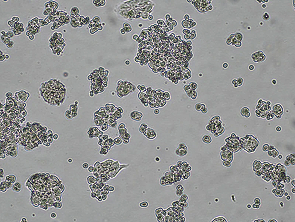
IM95 cells are generally medium to large in size with a rounded or irregular shape. They can appear as single cells or form clusters.
The frequency of medium changes for IM95 cells depends on several factors, including their growth rate, confluency, and the specific experimental requirements. Here are general guidelines for medium changes:
Daily Feeding: It is typically recommended to change the medium daily for IM95 cells to maintain optimal growth conditions. This helps ensure a fresh supply of nutrients, remove waste products, and maintain pH balance in the culture.
Cell Density and Confluency: If the cells reach high confluency (80-90%), they should be subcultured or the medium changed to prevent overgrowth, which can lead to differentiation or reduced viability.
Experimental Needs: Adjust the frequency of medium changes based on the specific requirements of your experiments. For example, if you are conducting long-term experiments or treatments, more frequent medium changes might be necessary to maintain consistent conditions.
Monitoring: Regularly monitor the pH of the medium and the appearance of the cells. If the medium becomes acidic or yellowish, or if the cells start detaching or showing signs of stress, consider increasing the frequency of medium changes.
By maintaining a consistent schedule of medium changes, you can help ensure healthy growth and optimal experimental outcomes for IM95 cells in culture.