



• Buy 1 Get 1 FREE for immortalized cells| limited time until end of June

  • Boost Your Research with FREE Freezing Medium

Tumor Cell Lines

J774A.1

  • For research use only

Cat No.

ABC-TC0463

Product Type

Mouse Sarcoma Cell Lines

Species

Mouse

Growth Conditions

37 ℃, 5% CO2

Source Organ

Blood

Disease

Sarcoma

Product Code

J-774A.1; J774.A1; J774 A1; J774A1; J 774A.1; J774 A.1

J774A.1 Cells are active in antibody dependent phagocytosis [Pubmed: 1101071].

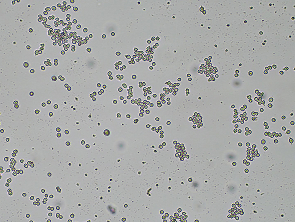
Product Image

Description

J774A.1 is a murine monocyte/macrophage-like tumor cell line originally derived from the ascites tumor of a female BALB/c mouse with reticulum cell sarcoma. It exhibits adherent to semi-adherent macrophage morphology in culture, with a granular cytoplasm and macrophage-typical behavior such as antibody-dependent phagocytosis. J774A.1 cells synthesize and continuously secrete interleukin-1 (IL-1) and lysozyme, and can produce other cytokines (e.g., IL-5) and growth factors. The line expresses receptors for immunoglobulin and complement, and supports studies of innate immune activity and macrophage responses. J774A.1 is widely used for macrophage-centric functional studies. The cells undergo rigorous screening and isolation procedures, and are rigorously tested to ensure they are free of contamination from HIV-1, HBV, HCV, Syphilis, Mycoplasma, Fungi, Yeast, and Bacteria.

Product Code

J-774A.1; J774.A1; J774 A1; J774A1; J 774A.1; J774 A.1

Species

Mouse

Cat.No

ABC-TC0463

Product Category

Tumor Cell Lines

Size/Quantity

1 vial

Growth Mode

Semi-adherent

Shipping Info

Dry Ice

Growth Conditions

37 ℃, 5% CO2

Source Organ

Blood

Disease

Sarcoma

Biosafety Level

1

Storage

Liquid Nitrogen

Product Type

Mouse Sarcoma Cell Lines

Application

  • J774A.1 mouse macrophages serve as an in vitro model of murine macrophages for investigating innate immune responses, phagocytosis, cytokine production, and inflammatory signaling pathways. They are applied in immunology research, metabolic studies, pathogen-host interaction assays, and pharmacological evaluations of compounds affecting macrophage function.

Citation

When you publish your research, please cite our product as “AcceGen Biotech Cat.# XXX-0000”. In return, we’ll give you a $200 coupon. Simply click here and submit your paper’s PubMed ID (PMID).

Frequently Asked Questions

  • What is the J774A.1 cell line?

    J774A.1 cells were isolated from the ascitic fluid of an adult female BALB/cN mouse with reticulum cell sarcoma. J774A.1 cells exhibit antibody-dependent phagocytosis and their growth is inhibited by dextran sulfate, PPD and LPS. J774A.1 cells can produce IL-1β and large amounts of lysozyme.

  • Do you have the subculture tips for J774A.1 cells?

    Cells are semi-adherent, subcultured by harvesting attached and suspension cells. Remove majority of medium and centrifuge to harvest cells growing in suspension. Scrape adherent cells remaining in the flask. Resuspend cell pellet from centrifugation and combine with scraped cells. Do not use trypsin. On receipt growing order cells may be in suspension. The cells and media should be removed from the flask and spun down to form a pellet, then re-suspended in fresh media. The J774A.1 seeding density is 2-4 x 10⁴/cm2, cells will show signs of re-attachment within 48 hours.

  • Is the J774 cell line susceptibility to toxic effects?

    It seem so. The J774 mouse macrophages seem more susceptible to the toxic effects of oritavancin than human THP-1 cells. This is likely because J774 cells accumulate the drug to a greater extent than human cells.

Inquiring J774A.1

We know how valuable your research is to you, but are you wondering what you can expect to pay for quick accurate results every time? Fill out a request in the form below and we’ll get back to you within 24 hours with a quote.
High Viability
To succeed in cell culture
Precision and Reliability
To support a consistent result
Customization Options
Tailed to your research

Tags

AcceGen Scroll Top Button