



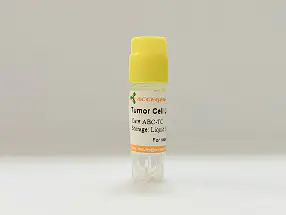
For research use only
| Cat No. | ABC-TC0508 |
| Product Type | Human Uterine Cancer Cell Lines |
| Species | Human |
| Growth Conditions | 37 ℃, 5% CO2 |
| Source Organ | Uterus |
| Disease | Adenocarinoma |
| Product Code | KLE cell, KLE cell line |
Electron microscopy of tumors formed in nude mice shows microvilli and junctional complexes, and nucleolar channel systems are present
KLE is a human endometrial adenocarcinoma cell line originally established from a poorly differentiated endometrial tumor of a 68‑year‑old Caucasian female patient at Vincent Memorial Hospital in Boston, Massachusetts, with advanced adenocarcinoma that had invaded surrounding tissue prior to sampling. The cells grow as adherent epithelial‑like monolayers in vitro and are widely used as a model of type II endometrial carcinoma; they are estrogen receptor‑negative and lack progesterone receptor expression, distinguishing them from some other endometrial lines. Tumors formed from KLE cells in immunodeficient mice display microvilli, junctional complexes, and nucleolar channel systems similar to those seen in normal endometrium under progestational stimulation, although they do not form glandular structures. Genetic profiling shows stable microsatellite status, TP53 mutation, and other alterations consistent with aggressive endometrial cancer biology. The cells undergo rigorous screening and isolation procedures, and are rigorously tested to ensure they are free of contamination from HIV‑1, HBV, HCV, Syphilis, Mycoplasma, Fungi, Yeast, and Bacteria.
| Product Code | KLE cell, KLE cell line |
| Species | Human |
| Cat.No | ABC-TC0508 |
| Product Category | Tumor Cell Lines |
| Size/Quantity | 1 vial |
| Growth Mode | Adherent |
| Shipping Info | Dry Ice |
| Growth Conditions | 37 ℃, 5% CO2 |
| Source Organ | Uterus |
| Disease | Adenocarinoma |
| Biosafety Level | 1 |
| Storage | Liquid Nitrogen |
| Product Type | Human Uterine Cancer Cell Lines |
KLE is used as an in vitro model of human endometrial adenocarcinoma for studies of tumor cell proliferation, cell signaling, and aggressive type II endometrial cancer phenotypes. It supports investigation of molecular mechanisms underlying hormone independence, TP53‑associated pathways, IGF‑binding protein secretion, and comparative drug response profiling, as well as ultrastructural studies of epithelial cell morphology and junctional complexes in adenocarcinoma research.
When you publish your research, please cite our product as “AcceGen Biotech Cat.# XXX-0000”. In return, we’ll give you a $200 coupon. Simply click here and submit your paper’s PubMed ID (PMID).