



For research use only
| Cat No. | ABC-TC0517 |
| Product Type | Human Myeloma Cell Lines |
| Cell Type | Lymphocyte-like |
| Species | Human |
| Growth Conditions | 37 ℃, 5% CO2 |
| Disease | Multiple Myeloma |
| Product Code | KMM1 |
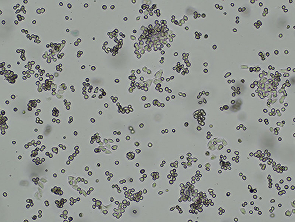
KMM-1 plasma cell myeloma line grows in suspension,secretes lambda chains,EBV-negative,shows late-stage B-cell differentiation with lymphoblast morphology.
KMM‑1 is a human multiple myeloma cell line established from a subcutaneous plasmacytoma of a 62‑year‑old male patient of East Asian descent. The cells grow in suspension with small round‑cell and occasional multinucleate morphology, they exhibit prominent nucleoli and abundant rough endoplasmic reticulum, consistent with plasma cell ultrastructure. Cytogenetic analysis reveals complex karyotypes with chromosomal alterations, including del(6q), monosomy 13 (−13), typical of plasma cell dyscrasia. Gene expression profiling shows high levels of immunoglobulin light chains and plasma cell-associated markers such as CD38 and CD138, confirming their plasma cell phenotype. KMM-1 demonstrates strong tumorigenic potential when implanted into immunocompromised mice, forming palpable tumors. The line also exhibits metastatic behavior, with potential to spread to other tissues. KMM-1 serves as a valuable model for studying plasma cell myeloma pathogenesis, progression, and therapeutic responses.
| Product Code | KMM1 |
| Species | Human |
| Cat.No | ABC-TC0517 |
| Product Category | Tumor Cell Lines |
| Size/Quantity | 1 vial |
| Cell Type | Lymphocyte-like |
| Growth Mode | Suspension |
| Shipping Info | Dry Ice |
| Growth Conditions | 37 ℃, 5% CO2 |
| Disease | Multiple Myeloma |
| Biosafety Level | 1 |
| Storage | Liquid Nitrogen |
| Product Type | Human Myeloma Cell Lines |
The KMM-1 cell line is widely utilized in research due to its versatility in studying antioxidant, antiproliferative, and immunostimulatory effects. It serves as a valuable model for investigating apoptosis induction in cancer cells by potential inhibitors. Additionally, KMM-1 cells play a crucial role in preclinical trials focused on immunophenotypic and immunotypic assessments. Moreover, they are instrumental in evaluating the efficacy of therapeutic agents, including small guide RNAs, against multiple myeloma, thereby contributing significantly to the development of novel treatment strategies for this disease.
When you publish your research, please cite our product as “AcceGen Biotech Cat.# XXX-0000”. In return, we’ll give you a $100 coupon. Simply click here and submit your paper’s PubMed ID (PMID).