



For research use only
| Cat No. | ABC-TC0525 |
| Product Type | Human Lymphocytes Cell Lines |
| Cell Type | Lymphocyte-like |
| Species | Human |
| Growth Conditions | 37 ℃, 5% CO2 |
| Source Organ | Bone Marrow |
| Disease | Multiple Myeloma |
| Product Code | KMS20 |
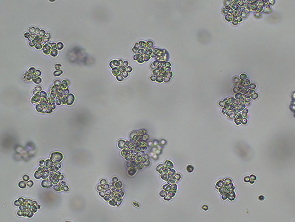
Species: human - female, 65 years old, homo sapiens; Tissue: hemo-lymphocytic; Small round-cell morphology, part is multinucleate cell.
KMS‑20 is a human multiple myeloma (MM) cell line established from the bone marrow of a 65‑year‑old female patient with plasma cell myeloma, representing a mature lymphocyte‑like plasma cell phenotype documented in major cell line resources. The cells grow in suspension with small round‑cell morphology and occasional multinucleate forms, and carry characteristic genomic alterations including homozygous KRAS p.Gly12Ser and TP53 p.Tyr126Ter mutations reflecting advanced myeloma biology. Functional profiling has shown that KMS‑20 has a relatively low sensitivity to proteasome inhibitors such as bortezomib and ixazomib, correlated with activation of the serum/glucocorticoid‑regulated kinase 1 (SGK1) and NF‑κB pathways in comparison with other MM lines. Additional studies report mitochondrial modulation contributing to bortezomib resistance in KMS‑20 cells. Genetic and expression features described here are based on published literature and database records. The cells undergo rigorous screening and isolation procedures, and are rigorously tested to ensure they are free of contamination from HIV‑1, HBV, HCV, Syphilis, Mycoplasma, Fungi, Yeast, and Bacteria.
| Product Code | KMS20 |
| Species | Human |
| Cat.No | ABC-TC0525 |
| Product Category | Tumor Cell Lines |
| Size/Quantity | 1 vial |
| Cell Type | Lymphocyte-like |
| Growth Mode | Suspension |
| Shipping Info | Dry Ice |
| Growth Conditions | 37 ℃, 5% CO2 |
| Source Organ | Bone Marrow |
| Disease | Multiple Myeloma |
| Biosafety Level | 1 |
| Storage | Liquid Nitrogen |
| Product Type | Human Lymphocytes Cell Lines |
KMS‑20 is used as an in vitro human multiple myeloma model to study plasma cell malignancy mechanisms, drug response and resistance, and oncogenic signaling. It supports investigation of proteasome inhibitor sensitivity, SGK1/NF‑κB pathway modulation, mitochondrial function in drug resistance, and comparative functional genomics with other MM cell lines, as well as preclinical evaluation of targeted therapeutics and combination strategies in hematologic cancer research.
When you publish your research, please cite our product as “AcceGen Biotech Cat.# XXX-0000”. In return, we’ll give you a $200 coupon. Simply click here and submit your paper’s PubMed ID (PMID).