



For research use only
| Cat No. | ABC-TC0650 |
| Product Type | Human Breast Cancer Cell Lines |
| Cell Type | Epithelial |
| Species | Human |
| Growth Conditions | 37 ℃ |
| Source Organ | Breast |
| Product Code | MDA MB 175 VII; MDA-MB-175VII; MDAMB175VII; MDA-MB-175; MDAMB175; MDA-175; MDA175; MD Anderson-Metastatic Breast-175-VII |
MDA-MB-175-VII cell line is a breast carcinoma model used for ERBB2/ERBB3 signaling, targeted drug testing, and resistance mechanism research in oncology.
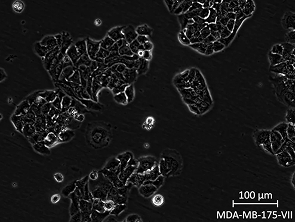
MDA-MB-175-VII is a human breast invasive ductal carcinoma (IDC) cell line derived from the pleural effusion of a 56-year-old Black or African American female patient diagnosed with metastatic breast carcinoma. The cells exhibit an epithelial-like morphology and are semi-adherent under standard culture conditions. They retain key molecular features of luminal breast cancer, including estrogen receptor (ER) positivity and HER2 negativity, making them a valuable tool for studying hormone-responsive breast cancer progression. Cytogenetically, MDA-MB-175-VII displays an aneuploid karyotype, with chromosome counts ranging from 82 to 89 and a stemline modal number of 84, placing it in the hypertetraploid to near-tetraploid range. This cell line is tumorigenic and metastatic when injected subcutaneously into nude mice, tumors consistently form within 21 days. MDA-MB-175-VII expresses markers associated with breast cancer progression and is frequently used to study oncogenic signaling pathways.
| Product Code | MDA MB 175 VII; MDA-MB-175VII; MDAMB175VII; MDA-MB-175; MDAMB175; MDA-175; MDA175; MD Anderson-Metastatic Breast-175-VII |
| Species | Human |
| Cat.No | ABC-TC0650 |
| Product Category | Tumor Cell Lines |
| Size/Quantity | 1 vial |
| Cell Type | Epithelial |
| Growth Mode | Adherent |
| Shipping Info | Dry Ice |
| Growth Conditions | 37 ℃ |
| Source Organ | Breast |
| Biosafety Level | 1 |
| Storage | Liquid Nitrogen |
| Product Type | Human Breast Cancer Cell Lines |
MDA-MB-175-VII cell line serves as a valuable asset in cancer research. It aids in identifying high-risk factors associated with breast cancer. Additionally, it facilitates the identification of pivotal genes and expressed proteins that drive breast cancer cell proliferation, while also enabling preclinical assessments of specific antibody effectiveness. The cell line’s utility extends to evaluating the apoptotic and cytotoxic impacts of different drugs, enhancing our understanding of potential treatments.
When you publish your research, please cite our product as “AcceGen Biotech Cat.# XXX-0000”. In return, we’ll give you a $200 coupon. Simply click here and submit your paper’s PubMed ID (PMID).


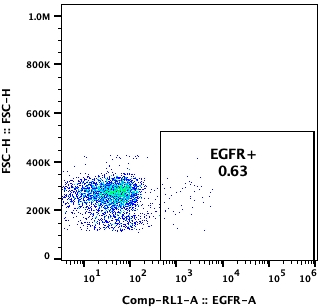
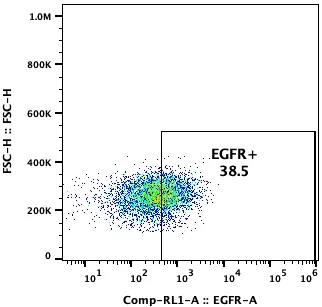
The percentage of EGFR expression in MDA-MB-175-VII Cell line was detected by flow cytometry to be approximately 38.5%.