


For research use only
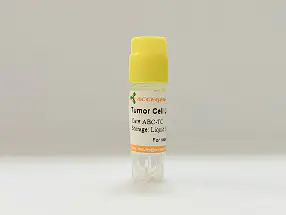
| Cat No. | ABC-TC058S |
| Product Type | Mouse Embryo Cell Lines |
| Species | Mouse- C3H |
| Growth Conditions | 37 ℃, 5% CO2 |
10T1/2 mouse embryonic fibroblast cells from C3H strain show fibroblast morphology, adherent growth, 80 chromosomes, ideal for developmental studies.
10T1/2, also known as C3H/10T1/2 clone 8, is a mouse embryonic fibroblast cell line originally derived from C3H/An mouse embryo tissue. These cells exhibit an elongated, spindle-shaped morphology typical of fibroblasts and grow adherently in culture, allowing continuous passaging. 10T1/2 cells are multipotent mesenchymal progenitors capable of differentiating into various lineages such as adipocytes, chondrocytes, and myocytes under appropriate conditions. They express fibroblast markers like vimentin and demonstrate active proliferation with contact inhibition. At the gene expression level, 10T1/2 cells express key mesenchymal transcription factors including Snail and Twist, involved in differentiation and epithelial-to-mesenchymal transition processes. Due to their plasticity and responsiveness to differentiation cues, 10T1/2 cells serve as a valuable in vitro model for studying mesenchymal cell biology, tissue development, and fibrosis. Their multipotent differentiation capacity and stable growth characteristics make them ideal for applications in regenerative medicine, fibrosis research, and developmental biology.
| Species | Mouse- C3H |
| Cat.No | ABC-TC058S |
| Product Category | Tumor Cell Lines |
| Size/Quantity | 1 vial |
| Shipping Info | Dry Ice |
| Growth Conditions | 37 ℃, 5% CO2 |
| Biosafety Level | 1 |
| Storage | Liquid Nitrogen |
| Product Type | Mouse Embryo Cell Lines |
The 10T1/2 cell line serves as a valuable in vitro model for studying mesodermal determination and differentiation. It offers a unique platform for investigating the genetic and molecular mechanisms that guide the lineage commitment and development of vertebrate stem cells. Researchers commonly use these cells to explore gene regulation during early development, making them essential for developmental biology and regenerative research.
When you publish your research, please cite our product as “AcceGen Biotech Cat.# XXX-0000”. In return, we’ll give you a $100 coupon. Simply click here and submit your paper’s PubMed ID (PMID).