



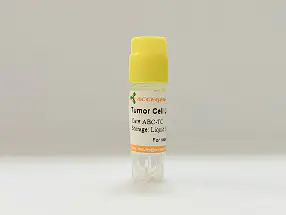
For research use only
| Cat No. | ABC-TC0062 |
| Product Type | Mouse Melanoma Cell Lines |
| Cell Type | Epithelial-like |
| Species | Mouse |
| Growth Conditions | 37 ℃, 5% CO2 |
| Source Organ | Skin |
| Disease | Melanoma |
| Product Code | B16/F10; B16 F10; B16F10; B16 melanoma F10 |
B16-F10 is a metastatic mouse melanoma cell line with lung colonization potential and VEGF expression, ideal for tumorigenicity and metastasis studies.
B16-F10 is a highly metastatic murine melanoma cell line derived via serial in vivo selection (10th passage) from a spontaneous melanoma in C57BL/6 J mice (B16-F0 parent cell line). These cells were isolated based on their remarkable ability to generate lung colonies following intravenous injection. These adherent cells exhibit a mix of spindle‑shaped and epithelial‑like morphology with abundant melanin pigment, enabling easy visualization of metastatic lesions in lungs and lymph nodes. Gene expression studies reveal wild‑type Braf and Nras, intact Tp53, along with deletions in the Ink4a/Arf locus, supporting aggressive tumor behavior. In vivo, B16‑F10 forms rapidly growing primary tumors and predictable lung metastases when implanted into syngeneic mice. Upon introduction into mouse skin, these cells demonstrate a perivascular predominance in VEGF expression across multiple vessels. Their characteristics make these cells a prototypical model for melanoma metastasis research.
| Product Code | B16/F10; B16 F10; B16F10; B16 melanoma F10 |
| Species | Mouse |
| Cat.No | ABC-TC0062 |
| Product Category | Tumor Cell Lines |
| Size/Quantity | 1 vial |
| Cell Type | Epithelial-like |
| Growth Mode | Adherent |
| Shipping Info | Dry Ice |
| Growth Conditions | 37 ℃, 5% CO2 |
| Source Organ | Skin |
| Disease | Melanoma |
| Biosafety Level | 1 |
| Storage | Liquid Nitrogen |
| Product Type | Mouse Melanoma Cell Lines |
The B16-F10 cell line holds a pivotal role in advancing skin cancer research, with a specific emphasis on the intricate realm of metastasis. Their distinctive profile, marked by low immunogenicity and remarkable aggressiveness, positions them as a cornerstone in studies related to murine tumor immunotherapy. Furthermore, they serve as a crucial tool for deciphering the complex factors governing the successful implantation and subsequent survival of B16 melanoma. Moreover, these cells provide a reliable platform for evaluating the inhibitory effects of various agents on murine melanoma metastasis, allowing for a comprehensive understanding of the underlying mechanisms at play.
When you publish your research, please cite our product as “AcceGen Biotech Cat.# XXX-0000”. In return, we’ll give you a $200 coupon. Simply click here and submit your paper’s PubMed ID (PMID).