



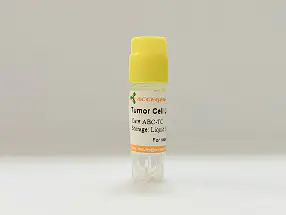
For research use only
| Cat No. | ABC-TC0061 |
| Product Type | Mouse Melanoma Cell Lines |
| Cell Type | Epithelial-like |
| Species | Mouse |
| Growth Conditions | 37 ℃, 5% CO2 |
| Source Organ | Skin |
| Disease | Melanoma |
| Product Code | B16/F1; B16 F1; B16F1 |
The cell pellet is coloured grey.The species was confirmed by Real-Time PCR
B16-F1 cell line is a murine melanoma cell line derived from the parental B16 line, originally isolated from a spontaneous skin tumor in C57BL/6 mice. B16-F1 is one of several subclones developed to study differential metastatic behavior and exhibits low metastatic potential relative to other sublines such as B16-F10. The cells display epithelial-like morphology, dark pigmentation due to melanin production, and grow as adherent monolayers in vitro. B16-F1 cells are genetically stable, with a near-diploid karyotype, and express melanocyte markers including tyrosinase and gp100. The line is tumorigenic in syngeneic C57BL/6 mice, forming localized cutaneous tumors without extensive metastasis, making it ideal for studying early-stage melanoma progression, tumor immunology, and response to immunotherapies in a murine model. The cells undergo rigorous screening and isolation procedures, and are rigorously tested to ensure they are free of contamination from Mycoplasma, Fungi, Yeast, and Bacteria.
| Product Code | B16/F1; B16 F1; B16F1 |
| Species | Mouse |
| Cat.No | ABC-TC0061 |
| Product Category | Tumor Cell Lines |
| Size/Quantity | 1 vial |
| Cell Type | Epithelial-like |
| Growth Mode | Adherent |
| Shipping Info | Dry Ice |
| Growth Conditions | 37 ℃, 5% CO2 |
| Source Organ | Skin |
| Disease | Melanoma |
| Biosafety Level | 1 |
| Storage | Liquid Nitrogen |
| Product Type | Mouse Melanoma Cell Lines |
B16-F1 is widely used as a low-metastatic melanoma model in murine cancer research. Its syngeneic compatibility with C57BL/6 mice makes it suitable for immunotherapy studies, including checkpoint blockade and T-cell infiltration assays. B16-F1 supports investigations into melanogenesis, tumor antigen presentation, and localized tumor growth dynamics. Researchers frequently use B16-F1 in comparative studies with high-metastatic lines like B16-F10 to explore molecular pathways involved in metastasis and immune evasion. The line is also valuable for testing chemotherapeutics, small molecules, and adjuvant therapy combinations. Its stable growth and reproducible tumor phenotype make it a trusted tool in both basic and translational melanoma research.
When you publish your research, please cite our product as “AcceGen Biotech Cat.# XXX-0000”. In return, we’ll give you a $200 coupon. Simply click here and submit your paper’s PubMed ID (PMID).