



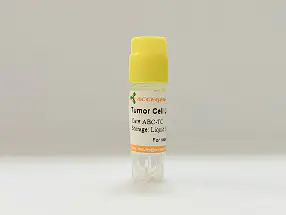
For research use only
| Cat No. | ABC-TC0486 |
| Product Type | Mouse Melanoma Cell Lines |
| Species | Mouse |
| Growth Conditions | 37 ℃, 5% CO2 |
| Disease | Melanoma |
| Product Code | K1735 |
Tumorigenecity: Isoenzyme: Histopathology: melanomaSubculture: Split ratio: Media change: Reverse transcritase: Production
K‑1735 is a mouse melanoma cell line originating from a chemically induced melanoma in Mus musculus (C3H/HeN) and is widely used as a syngeneic melanoma model. The cells exhibit adherent, epithelial‑like morphology typical of murine melanoma and possess oncogenic alterations such as an activating Nras p.Gly13Asp mutation, which is relevant to melanoma progression and signaling studies. K‑1735 variants (including K1735‑C23 and others) have been used to explore phenotypic diversity, tumorigenic potential, and differential expression of cell surface markers and integrins that modulate adhesion and migration, reflecting their utility in melanoma biology research. In syngeneic mouse models, K-1735 derivatives display variable tumor growth kinetics, supporting in vivo studies of melanoma progression. Metastatic potential varies among subclones and is not universal across all derivatives. The cells undergo rigorous screening and isolation procedures, and are rigorously tested to ensure they are free of contamination from Mycoplasma, Fungi, Yeast, and Bacteria.
| Product Code | K1735 |
| Species | Mouse |
| Cat.No | ABC-TC0486 |
| Product Category | Tumor Cell Lines |
| Size/Quantity | 1 vial |
| Shipping Info | Dry Ice |
| Growth Conditions | 37 ℃, 5% CO2 |
| Disease | Melanoma |
| Biosafety Level | 1 |
| Storage | Liquid Nitrogen |
| Product Type | Mouse Melanoma Cell Lines |
K‑1735 is used as an in vitro and in vivo mouse melanoma research model for studies of tumor cell proliferation, signaling pathways involved in melanoma oncogenesis, and genotype‑phenotype correlations in cancer progression. It supports evaluation of cellular adhesion, migration, and integrin‑mediated extracellular matrix interactions, analysis of therapeutic agents targeting melanoma growth, and comparative studies of melanoma subclone behavior under experimental conditions.
When you publish your research, please cite our product as “AcceGen Biotech Cat.# XXX-0000”. In return, we’ll give you a $200 coupon. Simply click here and submit your paper’s PubMed ID (PMID).