
For research use only
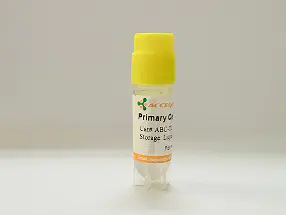
| Cat No. | ABC-TC3047 |
| Product Type | Mouse Primary Cells |
| Cell Type | Fibroblast |
| Species | B6129SF2/J Mouse |
| Growth Conditions | 37 ℃, 5% CO2 |
| Source Organ | Liver |
| Disease | Normal |
| Storage | Liquid Nitrogen |
Mouse liver fibroblasts are isolated from tissue of pathogen-free laboratory mice.
B6129SF2/J Mouse Liver Fibroblasts are primary cells isolated from the liver tissue of B6129SF2/J mice and provide a relevant model for studying b6129sf2 j fibroblast cell interaction within the hepatic microenvironment. They play a pivotal role in extracellular matrix (ECM) deposition during liver injury. They are implicated in hepatic fibrogenesis, particularly in response to toxins like carbon tetrachloride (CCl₄) or bile duct ligation, where they transition into myofibroblasts and contribute to collagen accumulation. These fibroblasts exhibit typical spindle-shaped morphology and adherent growth in vitro. Expression of α-SMA is confirmed by immunocytochemistry under fibrogenic stimulation. Studies confirm their involvement in cholestatic liver disease, with portal fibroblasts driving fibrosis via α-smooth muscle actin (α-SMA) expression. In vitro, these cells display limited proliferative capacity. Each lot undergoes rigorous screening and isolation procedures, and is rigorously tested to ensure it is free of contamination from Mycoplasma, Fungi, Yeast, and Bacteria.
| Product Code | B6129SF2/J Mouse Liver Fibroblasts, B6129SF2J liver fibroblasts, Mouse liver fibroblasts B6129SF2/J |
| Species | B6129SF2/J Mouse |
| Cat.No | ABC-TC3047 |
| Product Category | Primary Cells |
| Size/Quantity | 1 vial |
| Cell Type | Fibroblast |
| Growth Mode | Adherent |
| Shipping Info | Dry Ice |
| Growth Conditions | 37 ℃, 5% CO2 |
| Source Organ | Liver |
| Disease | Normal |
| Biosafety Level | 1 |
| Storage | Liquid Nitrogen |
| Product Type | Mouse Primary Cells |
| Quality Control | All cells test negative for mycoplasma, bacteria, yeast, and fungi. |
B6129SF2/J Mouse Liver Fibroblasts serve as a critical in vitro model for investigating liver fibrogenesis. They enable mechanistic studies on ECM dysregulation in toxin-induced fibrosis or cholestatic injury. Researchers utilize these cells to screen anti-fibrotic drugs targeting pathways like TGF-β1 or PDGF signaling. These cells demonstrate robust myofibroblast activation and collagen synthesis upon profibrotic stimuli, making them invaluable for therapeutic target discovery and fibrosis pathway elucidation. For instance, their role in epithelial-mesenchymal transition (EMT) provides insights into fibrosis progression in non-alcoholic fatty liver disease (NAFLD) models.
When you publish your research, please cite our product as “AcceGen Biotech Cat.# XXX-0000”. In return, we’ll give you a $200 coupon. Simply click here and submit your paper’s PubMed ID (PMID).