



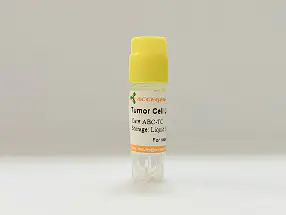
For research use only
| Cat No. | ABC-TC0083 |
| Product Type | Human Breast Cancer Cell Lines |
| Cell Type | Epithelial |
| Species | Human |
| Growth Conditions | 37 ℃, 5% CO2 |
| Source Organ | Breast |
| Product Code | BT 20; BT20 |
BT-20 cell line is a human breast carcinoma model widely used for cancer signaling, drug sensitivity testing, and breast cancer therapy development.
BT-20 is a human triple-negative breast carcinoma (TNBC) cell line established in 1958 from a pleural/primary tumor of a 74-year-old Caucasian female patient with invasive ductal carcinoma. These cells grow as an epithelial-like monolayer, display a hyperdiploid karyotype (~48-50 chromosomes), and exhibit extensive genome rearrangements. BT-20 lacks functional expression of estrogen receptor (ER), progesterone receptor (PR), and HER2, though it expresses an ER mRNA transcript containing an exon-5 deletion. Moreover, it harbors high-level EGFR amplification and overexpression, along with mutations in TP53 and PIK3CA. This genetic and phenotypic profile makes BT-20 a prototypical basal A subtype suitable for mechanistic and therapeutic research. The cells undergo rigorous screening and isolation procedures, and are rigorously tested to ensure they are free of contamination from HIV-1, HBV, HCV, Syphilis, Mycoplasma, Fungi, Yeast, and Bacteria.
| Product Code | BT 20; BT20 |
| Species | Human |
| Cat.No | ABC-TC0083 |
| Product Category | Tumor Cell Lines |
| Size/Quantity | 1 vial |
| Cell Type | Epithelial |
| Growth Mode | Adherent |
| Shipping Info | Dry Ice |
| Growth Conditions | 37 ℃, 5% CO2 |
| Source Organ | Breast |
| Biosafety Level | 1 |
| Storage | Liquid Nitrogen |
| Product Type | Human Breast Cancer Cell Lines |
BT-20 cells are an established model for triple-negative breast cancer (TNBC), widely used in cancer research to study tumorigenesis, invasion, and drug susceptibility. Their EGFR amplification and PIK3CA mutation status enable applications in screening for EGFR-targeted therapies and PI3K pathway inhibitors. They also serve as a platform to evaluate antimetastatic compounds—for example, the curcumin analog NC2603 effectively suppresses cell migration via modulation of genes such as EGR3, ATF3, and SOCS3. Moreover, their defined receptor-negativity profile supports investigations into receptor-independent growth pathways and therapeutic resistance mechanisms.
When you publish your research, please cite our product as “AcceGen Biotech Cat.# XXX-0000”. In return, we’ll give you a $200 coupon. Simply click here and submit your paper’s PubMed ID (PMID).