



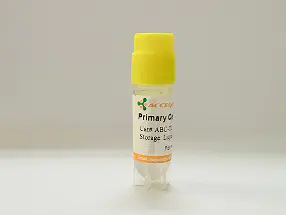
For research use only
| Cat No. | ABC-TC3150 |
| Product Type | Mouse Primary Cells |
| Cell Type | Epithelial |
| Species | C57BL/10J Mouse |
| Growth Conditions | 37 ℃, 5% CO2 |
| Source Organ | Kidney |
| Disease | Normal |
| Storage | Liquid Nitrogen |
Mouse primary kidney epithelial cells (MPKIDEpiCs) are isolated from tissue of pathogen-free laboratory mice.
C57BL/10J Mouse Kidney Epithelial Cells are primary cells isolated from renal tissue of C57BL/10J mice and represent renal tubular epithelial populations. These cells typically exhibit a cuboidal to columnar morphology, form adherent monolayers in culture, and display characteristic epithelial polarity. They may express epithelial and renal tubular-associated markers such as Na⁺/K⁺-ATPase, E-cadherin, and tight junction proteins including ZO-1. In vitro, these cells retain functional features associated with renal tubular epithelium, including solute transport-related activity, epithelial barrier properties, and cytokine secretion under appropriate conditions. Additionally, research on urinary epithelial cells in C57BL/10J mice has enhanced understanding of kidney tubular epithelium and its contribution to overall renal health. Each lot undergoes rigorous screening and isolation procedures, and is rigorously tested to ensure it is free of contamination from Mycoplasma, Fungi, Yeast, and Bacteria.
| Product Code | C57BL/10J Mouse Kidney Epithelial Cells, C57BL/10J KEC, B10J Renal ECs, C57BL10J Tubular ECs |
| Species | C57BL/10J Mouse |
| Cat.No | ABC-TC3150 |
| Product Category | Primary Cells |
| Size/Quantity | 1 vial |
| Cell Type | Epithelial |
| Growth Mode | Adherent |
| Shipping Info | Dry Ice |
| Growth Conditions | 37 ℃, 5% CO2 |
| Source Organ | Kidney |
| Disease | Normal |
| Biosafety Level | 1 |
| Storage | Liquid Nitrogen |
| Product Type | Mouse Primary Cells |
| Quality Control | All cells test negative for mycoplasma, bacteria, yeast, and fungi. |
C57BL/10J Mouse Kidney Epithelial Cells can be used to explore the molecular mechanisms of physiological processes such as tubular reabsorption, electrolyte balance regulation, and toxic substance excretion, helping to understand the normal function of the kidney. These cells can also be used to evaluate the toxic effects of drugs on the kidneys, assess whether the drugs affect cell viability, disrupt cellular structure, or interfere with normal physiological functions, and provide key data for drug safety evaluation.
When you publish your research, please cite our product as “AcceGen Biotech Cat.# XXX-0000”. In return, we’ll give you a $200 coupon. Simply click here and submit your paper’s PubMed ID (PMID).