

For research use only
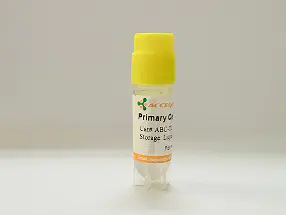
| Cat No. | ABC-TC3153 |
| Product Type | Mouse Primary Cells |
| Cell Type | Fibroblast |
| Species | C57BL/10J Mouse |
| Growth Conditions | 37 ℃, 5% CO2 |
| Source Organ | Liver |
| Disease | Normal |
| Storage | Liquid Nitrogen |
Mouse liver fibroblasts are isolated from tissue of pathogen-free laboratory mice.
C57BL/10J Mouse Liver Fibroblasts primarily originate from the hepatic interstitial tissue and belong to the non-parenchymal cell population of the liver. These cells express fibroblast-specific marker vimentin and are involved in extracellular matrix (ECM) synthesis and tissue repair. They play a role in maintaining liver homeostasis and injury repair by secreting ECM components and growth factors (e.g., TGF-β, PDGF) to regulate the hepatic microenvironment. However, under chronic liver injury (such as carbon tetrachloride-induced liver fibrosis models), their excessive activation leads to abnormal accumulation of ECM, promoting the progression of liver fibrosis and even cirrhosis. Detailed analysis of the hepatic fibroblast phenotype in C57BL/10J mice is essential for understanding activation status and functional transitions in liver disease models, particularly in the context of fibrosis progression and extracellular matrix remodeling. The cells undergo rigorous screening and isolation procedures, and are rigorously tested to ensure they are free of contamination from HIV-1, HBV, HCV, Syphilis, Mycoplasma, Fungi, Yeast, and Bacteria.
| Product Code | C57BL/10J Mouse Liver Fibroblasts,Mouse Liver Fibroblasts,Hepatic Fibroblasts,Fibroblasts,FBs,C57BL/10J MLFs |
| Species | C57BL/10J Mouse |
| Cat.No | ABC-TC3153 |
| Product Category | Primary Cells |
| Size/Quantity | 1 vial |
| Cell Type | Fibroblast |
| Growth Mode | Adherent |
| Shipping Info | Dry Ice |
| Growth Conditions | 37 ℃, 5% CO2 |
| Source Organ | Liver |
| Disease | Normal |
| Biosafety Level | 1 |
| Storage | Liquid Nitrogen |
| Product Type | Mouse Primary Cells |
| Quality Control | All cells test negative for mycoplasma, bacteria, yeast, and fungi. |
C57BL/10J Mouse Liver Fibroblasts can be used to investigate cellular responses to chemical or environmental stimuli and to analyze how non-parenchymal liver cells contribute to liver physiology under defined experimental conditions. These cells can also be used to study the regulation mechanism of liver microenvironment, analyze cell-cell interactions, and provide a theoretical basis for the precise treatment of liver-related diseases.
When you publish your research, please cite our product as “AcceGen Biotech Cat.# XXX-0000”. In return, we’ll give you a $200 coupon. Simply click here and submit your paper’s PubMed ID (PMID).