



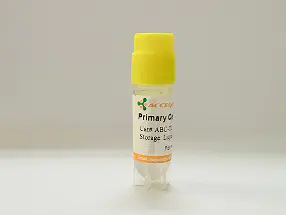
For research use only
| Cat No. | ABC-TC040L |
| Product Type | Mouse Cells |
| Cell Type | Neuron |
| Species | C57BL/6 Mouse |
| Growth Conditions | 37 ℃, 5% CO2 |
| Source Organ | Spinal Cord |
| Disease | Normal |
| Storage | Liquid Nitrogen |
C57BL/6 Mouse neurons are isolated from the pathogen-free laboratory mouse ventral spinal cord at embryonic day 18
C57BL/6 Mouse neurons are isolated from the pathogen-free laboratory mouse ventral spinal cord at embryonic day 18. AcceGen develop a simple, new, and reproducible method to isolate neurons. Each vial contains at least 1×10^6 cells per ml.
| Species | C57BL/6 Mouse |
| Cat.No | ABC-TC040L |
| Quality Control | All cells test negative for mycoplasma, bacteria, yeast, and fungi. |
| Product Category | Primary Cells |
| Size/Quantity | 1 vial |
| Cell Type | Neuron |
| Growth Mode | Adherent |
| Shipping Info | Dry Ice |
| Growth Conditions | 37 ℃, 5% CO2 |
| Source Organ | Spinal Cord |
| Disease | Normal |
| Biosafety Level | 1 |
| Storage | Liquid Nitrogen |
| Product Type | Mouse Cells |
For research use only
When you publish your research, please cite our product as “AcceGen Biotech Cat.# XXX-0000”. In return, we’ll give you a $100 coupon. Simply click here and submit your paper’s PubMed ID (PMID).
The central nervous system comprises neurons and glia. Neurons serve as the fundamental units, transmitting electrochemical signals. Despite morphological diversity, they form a complex communication network. The ventral spinal cord harbors nerve tracts conveying motor signals from the brain, crucial for voluntary movement. Injuries to this region can impair motor function.
C57BL/6 Mouse Neurons-ventral spinal cord find application in neuroscience research, particularly in understanding motor neuron function and spinal cord injuries. These neurons aid in studying motor signal transmission from the brain to the spinal cord and its impact on voluntary movement. Insights gained contribute to developing therapies for spinal cord injuries and motor neuron diseases.
AcceGen delivers frozen cells using dry ice. Upon reception, it is imperative to expeditiously transfer the frozen cells to a liquid nitrogen environment (-180oC). Notably, primary cells must strictly refrain from being stored at -20oC, as this temperature is incompatible with their preservation requirements.