



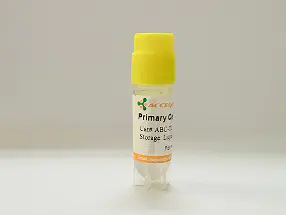
For research use only
| Cat No. | ABC-TC3301 |
| Product Type | Mouse Primary Cells |
| Cell Type | Neuron |
| Species | CD-1 Mouse |
| Growth Conditions | 37 ℃, 5% CO2 |
| Source Organ | Brain |
| Disease | Normal |
| Storage | Liquid Nitrogen |
The tissue of the central nervous system is made up of two classes of cells that may be broadly categorized as neurons and glia.
CD-1 Mouse Hippocampal Neurons are primary neuronal cells isolated from the hippocampus tissue of pathogen-free neonatal CD-1 mice via gentle enzymatic digestion and mechanical dissociation to preserve viability and morphology. Cultured cells exhibit typical pyramidal morphology and extensive neurite outgrowth, expressing neuronal markers including MAP2, NeuN, and βIII-tubulin. These neurons maintain stable electrophysiological activity and CD-1 mouse brain plasticity, making them suitable for neurodevelopmental, neurodegeneration, and synaptic plasticity studies. They are non-proliferative and ideal for in vitro hippocampal modeling, and can also be used to study CD-1 mouse stress and hippocampus. To ensure the quality of these primary cells, repeated freeze-thawcycles are not recommended due to the fragile nature of these cells. Each lot undergoes rigorous screening and isolation procedures, and is rigorously tested to ensure it is free of contamination from Mycoplasma, Fungi, Yeast, and Bacteria.
| Product Code | CD-1 Mouse Neurons Hippocampal, Mouse Hippocampal Neurons, Hippocampal Neurons, Neurons, HNs, CD-1 HNs |
| Species | CD-1 Mouse |
| Cat.No | ABC-TC3301 |
| Product Category | Primary Cells |
| Size/Quantity | 1 vial |
| Cell Type | Neuron |
| Growth Mode | Adherent |
| Shipping Info | Dry Ice |
| Growth Conditions | 37 ℃, 5% CO2 |
| Source Organ | Brain |
| Disease | Normal |
| Biosafety Level | 1 |
| Storage | Liquid Nitrogen |
| Product Type | Mouse Primary Cells |
| Quality Control | All cells test negative for mycoplasma, bacteria, yeast, and fungi. |
These hippocampal neurons serve as a valuable in vitro model for studying synaptic plasticity, memory formation, neurodegenerative diseases, and neuronal development. They support electrophysiological recordings, neurotransmitter release assays, and drug screening. Their robust growth and functionality make them ideal for investigating molecular mechanisms underlying learning and memory, neurotoxicity assessments, and neuropharmacology research.
When you publish your research, please cite our product as “AcceGen Biotech Cat.# XXX-0000”. In return, we’ll give you a $200 coupon. Simply click here and submit your paper’s PubMed ID (PMID).