



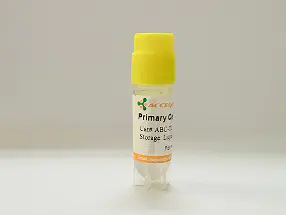
For research use only
| Cat No. | ABC-TC3232 |
| Product Type | Mouse Primary Cells |
| Cell Type | Epithelial |
| Species | C57BL/6 Mouse |
| Growth Conditions | 37 ℃, 5% CO2 |
| Source Organ | Kidney |
| Disease | Normal |
| Storage | Liquid Nitrogen |
Advance kidney research with C57BL/6 Mouse Proximal Tubular Epithelial Cells for nephrotoxicity, ion transport, and renal epithelial function modeling.
C57BL/6 Mouse Proximal Tubular Epithelial Cells are isolated from the kidney cortex of C57BL/6 mice. These cells form the lining of the proximal tubules and play a central role in reabsorption of solutes, water, and nutrients from the glomerular filtrate. They are key players in renal physiology and are implicated in acute kidney injury, nephrotoxicity, and chronic kidney disease. Proximal tubular epithelial cells serve as an important model for studying renal transport, oxidative stress, and inflammation. These cells express of epithelial markers such as aquaporin-1 (AQP1), Na+/K+-ATPase, and cytokeratin. Repeated freeze-thaw cycles should be avoided in vitro to preserve cell viability and functional phenotype. The cells undergo rigorous screening and isolation procedures, and are rigorously tested to ensure they are free of contamination from mycoplasma, fungi, yeast, and bacteria.
| Product Code | C57BL/6 Mouse Proximal Tubular Epithelial Cells, Mouse Proximal Tubular Epithelial Cells, Proximal Tubular Epithelial Cells, Renal Tubular Epithelial Cells, Epithelial Cells, EpiCs, PTECs, C57BL/6 PTECs |
| Species | C57BL/6 Mouse |
| Cat.No | ABC-TC3232 |
| Product Category | Primary Cells |
| Size/Quantity | 1 vial |
| Cell Type | Epithelial |
| Growth Mode | Adherent |
| Shipping Info | Dry Ice |
| Growth Conditions | 37 ℃, 5% CO2 |
| Source Organ | Kidney |
| Disease | Normal |
| Biosafety Level | 1 |
| Storage | Liquid Nitrogen |
| Product Type | Mouse Primary Cells |
| Quality Control | All cells test negative for mycoplasma, bacteria, yeast, and fungi. |
C57BL/6 Mouse Proximal Tubular Epithelial Cells offer a robust model for studying renal tubular function, especially solute transport, filtration, and reabsorption. They are widely used in research on acute kidney injury, nephrotoxicity, renal fibrosis, and diabetic nephropathy. These cells allow researchers to assess drug-induced damage and inflammation in kidney tubules, helping to develop renal-protective strategies in preclinical studies.
When you publish your research, please cite our product as “AcceGen Biotech Cat.# XXX-0000”. In return, we’ll give you a $200 coupon. Simply click here and submit your paper’s PubMed ID (PMID).