




For research use only
| Cat No. | ABC-TC0108 |
| Product Type | Human Kidney Cancer Cell Lines |
| Cell Type | Epithelial |
| Species | Human |
| Growth Conditions | 37 ℃, 5% CO2 |
| Source Organ | Kidney |
| Disease | Renal Cell Cancer |
| Product Code | CAL 54; CAL54 |
Established from the malignant pleural effusion of a 75-year-old man with kidney carcinoma in 1987
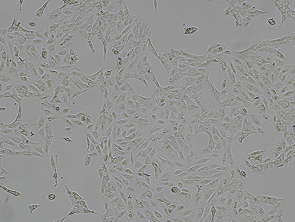
CAL-54 is a continuous human renal carcinoma cell line originally derived from a malignant pleural effusion of a patient with renal adenocarcinoma. These epithelial-like cells display stable, hyperdiploid karyotypes and consistently express cytokeratin, epithelial membrane antigen (EMA), and mesenchymal marker vimentin, indicating a degree of epithelial-mesenchymal plasticity often seen in renal cancers. When implanted in athymic nude mice, CAL-54 consistently forms well-differentiated adenocarcinomas with papillary structures, confirming its tumorigenicity. Moreover, genomic characterization highlights CAL-54 as one of the most genetically reliable renal cancer models, particularly in key loci such as VHL and TP53. These features make CAL-54 a robust system for studying tumor biology and therapeutic responses in renal cell carcinoma. The cells undergo rigorous screening and isolation procedures, and are rigorously tested to ensure they are free of contamination from HIV-1, HBV, HCV, Syphilis, Mycoplasma, Fungi, Yeast, and Bacteria.
| Product Code | CAL 54; CAL54 |
| Species | Human |
| Cat.No | ABC-TC0108 |
| Product Category | Tumor Cell Lines |
| Size/Quantity | 1 vial |
| Cell Type | Epithelial |
| Growth Mode | Adherent |
| Shipping Info | Dry Ice |
| Growth Conditions | 37 ℃, 5% CO2 |
| Source Organ | Kidney |
| Disease | Renal Cell Cancer |
| Biosafety Level | 1 |
| Storage | Liquid Nitrogen |
| Product Type | Human Kidney Cancer Cell Lines |
CAL-54 serves as an excellent preclinical model to investigate renal carcinoma biology, therapeutic responses, and particularly radiosensitivity, making it well-suited for radiation biology and combination treatment research. The stable genetic background, especially in VHL and TP53 loci, supports reliable assessments of targeted therapies and genetic interventions. Researchers can use CAL-54 for in vitro cytotoxicity assays, mechanistic pathway studies, and in vivo tumorigenicity and metastasis modeling.
When you publish your research, please cite our product as “AcceGen Biotech Cat.# XXX-0000”. In return, we’ll give you a $200 coupon. Simply click here and submit your paper’s PubMed ID (PMID).