



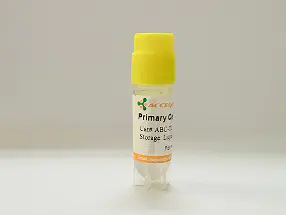
For research use only
| Cat No. | ABC-TC3289 |
| Product Type | Mouse Primary Cells |
| Cell Type | Fibroblast |
| Species | CD-1 Mouse |
| Growth Conditions | 37 ℃, 5% CO2 |
| Source Organ | Liver |
| Disease | Normal |
| Storage | Liquid Nitrogen |
Mouse liver fibroblasts are isolated from tissue of pathogen-free laboratory mice.
CD-1 Mouse Liver Fibroblasts are primary hepatic stromal cells isolated from pathogen-free CD-1 mouse livers using enzymatic digestion and mechanical dissociation to preserve viability and intrinsic function. They are suitable for studying fibroblast migration in CD-1 liver. These adherent fibroblasts exhibit typical spindle-shaped morphology. The cells express fibroblast-specific markers, including vimentin and FSP1. These fibroblasts provide a reliable and physiologically relevant model for hepatic fibrosis, extracellular matrix remodeling, and liver tumor-stroma interaction studies. To ensure the quality of these primary cells, repeated freeze-thawcycles are not recommended due to the fragile nature of these cells. Each lot undergoes rigorous screening and isolation procedures, and is rigorously tested to ensure it is free of contamination from Mycoplasma, Fungi, Yeast, and Bacteria.
| Product Code | CD-1 Mouse Liver Fibroblasts, Mouse Liver Fibroblasts, Liver Fibroblasts, Hepatic Fibroblasts, HFs, CD-1 HFs |
| Species | CD-1 Mouse |
| Cat.No | ABC-TC3289 |
| Product Category | Primary Cells |
| Size/Quantity | 1 vial |
| Cell Type | Fibroblast |
| Growth Mode | Adherent |
| Shipping Info | Dry Ice |
| Growth Conditions | 37 ℃, 5% CO2 |
| Source Organ | Liver |
| Disease | Normal |
| Biosafety Level | 1 |
| Storage | Liquid Nitrogen |
| Product Type | Mouse Primary Cells |
| Quality Control | All cells test negative for mycoplasma, bacteria, yeast, and fungi. |
CD-1 Mouse Liver Fibroblasts are highly suitable for studies of liver fibrosis mechanisms, extracellular matrix (ECM) synthesis and degradation, hepatic stellate cell interactions, and pro-fibrotic signaling pathways such as TGF-β. They also support toxicology assays involving fibrosis induction, and drug screening for anti-fibrotic compounds. Due to their liver-specific origin, these fibroblasts are ideal for constructing co-culture systems with hepatocytes or immune cells to model liver microenvironments, inflammatory responses, and fibrosis progression in vitro, including studies of myofibroblasts in CD-1 mouse liver. They can also be used for genetic manipulation or reporter assays in hepatic tissue engineering and regenerative studies.
When you publish your research, please cite our product as “AcceGen Biotech Cat.# XXX-0000”. In return, we’ll give you a $200 coupon. Simply click here and submit your paper’s PubMed ID (PMID).