



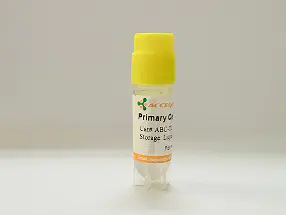
For research use only
| Cat No. | ABC-TC3924 |
| Product Type | Mouse Primary Cells |
| Cell Type | Astrocyte |
| Species | CD-1 Mouse |
| Growth Conditions | 37 ℃, 5% CO2 |
| Source Organ | Brain |
| Disease | Normal |
| Storage | Liquid Nitrogen |
CD-1 Mouse Mixed Astrocyte cultures support studies of neurobiology, glial cell function, and central nervous system disease models in mouse systems.
CD-1 Mouse Mixed Astrocytes are primary cells isolated from the cerebral tissue of CD-1 mice. As the major glial cell population in the central nervous system, these astrocytes consist of a mixed population of fibrous and protoplasmic subtypes, exhibiting a characteristic star-shaped morphology with adherent growth. They provide a variety of supportive functions to their partner neurons in the central nervous system (CNS), such as neuronal guidance during development, nutritional and metabolic support throughout life. Their dysregulation is linked to neurodegenerative disorders and traumatic brain injury. The cells express glial fibrillary acidic protein (GFAP). These cells have limited proliferative capacity in vitro. Each lot undergoes rigorous screening and isolation procedures, and is rigorously tested to ensure it is free of contamination from Mycoplasma, Fungi, Yeast, and Bacteria.
| Product Code | CD-1 Mouse Mixed Astrocytes, CD1 Mixed Glial Cells, CD-1 Astrocytes, Murine CD-1 Mixed Glia |
| Species | CD-1 Mouse |
| Cat.No | ABC-TC3924 |
| Product Category | Primary Cells |
| Size/Quantity | 1 vial |
| Cell Type | Astrocyte |
| Growth Mode | Adherent |
| Shipping Info | Dry Ice |
| Growth Conditions | 37 ℃, 5% CO2 |
| Source Organ | Brain |
| Disease | Normal |
| Biosafety Level | 1 |
| Storage | Liquid Nitrogen |
| Product Type | Mouse Primary Cells |
| Quality Control | All cells test negative for mycoplasma, bacteria, yeast, and fungi. |
CD-1 Mouse Mixed Astrocytes can be used as an in vitro cell model to study the pathogenesis of neuroinflammatory diseases and central nervous system (CNS) injuries, such as multiple sclerosis, traumatic brain injury, and ischemic stroke. Researchers can utilize this model to study their secretion of pro-inflammatory cytokines and neurotrophic factors in response to inflammatory stimuli or oxidative stress, enabling crucial insights into molecular pathways underlying astrocyte-mediated neuroprotection or neuroinflammation. This supports discovery research and molecular target identification for CNS disorders linked to aberrant astrocytic physiology in CNS homeostasis maintenance and pathological dysregulation.
When you publish your research, please cite our product as “AcceGen Biotech Cat.# XXX-0000”. In return, we’ll give you a $200 coupon. Simply click here and submit your paper’s PubMed ID (PMID).