



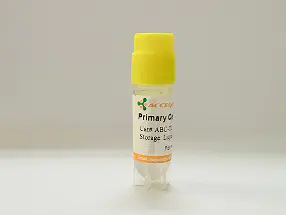
For research use only
| Cat No. | ABC-TC3319 |
| Product Type | Mouse Primary Cells |
| Cell Type | Fibroblast |
| Species | CD57 Mouse |
| Growth Conditions | 37 ℃, 5% CO2 |
| Source Organ | Heart |
| Disease | Normal |
| Storage | Liquid Nitrogen |
CD57-Mouse Cardiac Fibroblasts.
CD57 Mouse Cardiac Fibroblasts are isolated from the ventricular tissue of C57BL/6 mice and belong to a critical population of non-myocyte cells in the heart. These fibroblasts play essential roles in maintaining extracellular matrix (ECM) homeostasis, mechanical support, and responding to cardiac injury. The cells are collected from healthy animals, and cryopreserved at early passage to retain their native phenotype and function. Morphologically, cardiac fibroblasts are spindle-shaped and exhibit adherent growth. In disease models such as myocardial infarction and pressure overload-induced cardiac hypertrophy, these cells have been shown to undergo activation, contributing to cardiac fibrosis and remodeling. Cardiac fibroblasts express markers such as vimentin and DDR2. Each lot undergoes rigorous screening and isolation procedures, and is rigorously tested to ensure it is free of contamination from Mycoplasma, Fungi, Yeast, and Bacteria.
| Product Code | CD57 Mouse Cardiac Fibroblasts, Mouse Cardiac Fibroblasts, Cardiac Fibroblasts, Heart Fibroblasts, CFs, CD57 CFs |
| Species | CD57 Mouse |
| Cat.No | ABC-TC3319 |
| Product Category | Primary Cells |
| Size/Quantity | 1 vial |
| Cell Type | Fibroblast |
| Growth Mode | Adherent |
| Shipping Info | Dry Ice |
| Growth Conditions | 37 ℃, 5% CO2 |
| Source Organ | Heart |
| Disease | Normal |
| Biosafety Level | 1 |
| Storage | Liquid Nitrogen |
| Product Type | Mouse Primary Cells |
| Quality Control | All cells test negative for mycoplasma, bacteria, yeast, and fungi. |
CD57 Mouse Cardiac Fibroblasts offer a valuable model to study cardiac remodeling, fibrogenesis, and cell-matrix interactions in post-injury cardiac remodeling contexts. They are particularly suited for investigating TGF-β signaling pathways and their role in fibrotic gene expression, ECM production, and fibroblast-to-myofibroblast transition. Furthermore, these cells serve as an in vitro system for screening antifibrotic agents and dissecting molecular crosstalk between fibroblasts and cardiomyocytes under pathological conditions such as heart failure or dilated cardiomyopathy. These cells are also suitable for studying matrix metalloproteinase activity, mechanical stress responses, and fibroblast plasticity under pathological stimuli.
When you publish your research, please cite our product as “AcceGen Biotech Cat.# XXX-0000”. In return, we’ll give you a $200 coupon. Simply click here and submit your paper’s PubMed ID (PMID).