


For research use only
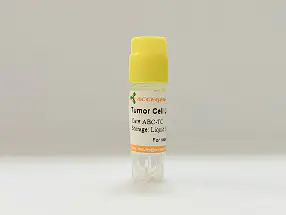
| Cat No. | ABC-TC0176 |
| Product Type | Human Melanoma Cell Lines |
| Cell Type | Fibroblast |
| Species | Human |
| Growth Conditions | 37 ℃, 5% CO2 |
| Source Organ | Skin |
| Disease | Cutaneous Melanoma |
| Product Code | COLO-858, Human Melanoma Cell Line COLO-858, COLO 858, COLO858, COLO-0858, Human Cutaneous Cancer Cells, Melanoma Experimental Model |
Human melanoma. Derived from a right axial lymph node of a 43 year old male with melanoma.
COLO-858 cell line, derived from a right axillary lymph node metastasis of a 43-year-old male with malignant melanoma, represents an aggressive subtype of cutaneous melanoma. Morphologically, these cells exhibit a fibroblastic-like, polygonal morphology with prominent nucleoli and moderate cytoplasm, typically growing in adherent monolayers with occasional cluster formation in vitro. Genes with altered expression in COLO-858 cells included the ECM component thrombospondin-1. COLO-858 shows modulation of the substance P/NK-1 receptor pathway, supporting studies of neurokinin-1 receptor signaling in melanoma cells. Each lot undergoes rigorous screening and isolation procedures, and is rigorously tested to ensure it is free of contamination from HIV-1, HBV, HCV, Syphilis, Mycoplasma, Fungi, Yeast, and Bacteria.
| Product Code | COLO-858, Human Melanoma Cell Line COLO-858, COLO 858, COLO858, COLO-0858, Human Cutaneous Cancer Cells, Melanoma Experimental Model |
| Species | Human |
| Cat.No | ABC-TC0176 |
| Product Category | Tumor Cell Lines |
| Size/Quantity | 1 vial |
| Cell Type | Fibroblast |
| Growth Mode | Adherent |
| Shipping Info | Dry Ice |
| Growth Conditions | 37 ℃, 5% CO2 |
| Source Organ | Skin |
| Disease | Cutaneous Melanoma |
| Biosafety Level | 1 |
| Storage | Liquid Nitrogen |
| Product Type | Human Melanoma Cell Lines |
COLO-858 is widely utilized in melanoma research, particularly for studying tumor progression, metastasis, and drug resistance mechanisms. As a metastatic melanoma model, it provides insights into lymph node dissemination and adaptive survival strategies of cancer cells. Researchers employ COLO-858 in in vitro assays to study cellular responses and signaling mechanisms in melanoma.
When you publish your research, please cite our product as “AcceGen Biotech Cat.# XXX-0000”. In return, we’ll give you a $200 coupon. Simply click here and submit your paper’s PubMed ID (PMID).