



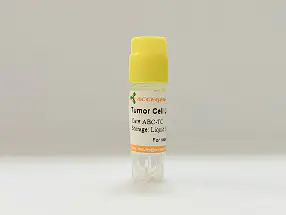
For research use only
| Cat No. | ABC-TC0201 |
| Product Type | Human Colon Cancer Cell Lines |
| Cell Type | Epithelial |
| Species | Human |
| Growth Conditions | 37 ℃, 5% CO2 |
| Source Organ | Colon |
| Disease | Adenocarinoma |
| Product Code | HT-29/CX-1; CX1 |
Adenocarcinoma, colorectal; Colon
CX-1 is a human colon cancer cell line derived from colon adenocarcinoma tissue of a 44-year-old female. The cells are characterized by an aggressive phenotype and a high metastatic potential, exhibiting enhanced migratory and invasive behavior. As an epithelial-like tumor cell line, CX-1 cells exhibit adherent growth in culture, displaying a polygonal to spindle-shaped morphology typical of colorectal carcinoma cells. Each lot undergoes rigorous screening and isolation procedures, and is rigorously tested to ensure it is free of contamination from HIV-1, HBV, HCV, Syphilis, Mycoplasma, Fungi, Yeast, and Bacteria.
| Product Code | HT-29/CX-1; CX1 |
| Species | Human |
| Cat.No | ABC-TC0201 |
| Product Category | Tumor Cell Lines |
| Size/Quantity | 1 vial |
| Cell Type | Epithelial |
| Shipping Info | Dry Ice |
| Growth Conditions | 37 ℃, 5% CO2 |
| Source Organ | Colon |
| Disease | Adenocarinoma |
| Biosafety Level | 1 |
| Storage | Liquid Nitrogen |
| Product Type | Human Colon Cancer Cell Lines |
CX-1 is primarily used in colorectal cancer (CRC) research, serving as a model to study tumor biology, drug resistance mechanisms, and metastatic behavior. Researchers utilize CX-1 to examine epithelial-mesenchymal transition (EMT), cell adhesion, and extracellular matrix interactions, which are critical in understanding tumor dissemination. Analysis of CX-1 morphology further provides insights into cell structure, growth patterns, and in vitro behavior, supporting studies of CRC biology and cellular mechanisms.
When you publish your research, please cite our product as “AcceGen Biotech Cat.# XXX-0000”. In return, we’ll give you a $200 coupon. Simply click here and submit your paper’s PubMed ID (PMID).