



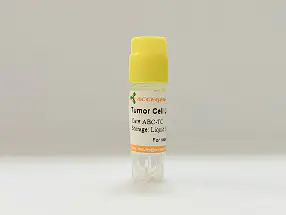
Tumor Cell Lines

DMS 454

  • For research use only

Cat No.

ABC-TC0215

Product Type

Human Lung Cancer Cell Lines

Species

Human

Growth Conditions

37 ℃, 5% CO2

Source Organ

Lung

Disease

Lung Small Cell Cancer

Product Code

DMS-454; DMS454

Research DMS 454, Human small cell lung carcinoma from a Caucasian male, isolated in 1981, suitable for cancer biology and drug discovery research.

Product Image

Description

DMS-454 is a human small cell lung carcinoma (SCLC) cell line derived from the lung tissue of a Caucasian male patient during autopsy. These cells display polygonal epithelial morphology, adhere loosely in culture and contain dense-core vesicles, secreting calcitonin, common for SCLC. Cytogenetically, DMS-454 cells display a complex hyperdiploid karyotype with multiple structural abnormalities. Like other classic SCLC models, they harbor TP53; Simple; p. Val157Phe (c. 469G>T) and RB1 mutations. DMS-454 cells are highly tumorigenic in immunodeficient mice and are frequently used to model chemoresistance and neuroendocrine plasticity in SCLC. Their gene expression profile also reveals overexpression of oncogenes such as MYC family members, which are critical in SCLC progression and are commonly grouped within broader DMS cancer model classifications in comparative SCLC research.

Product Code

DMS-454; DMS454

Species

Human

Cat.No

ABC-TC0215

Product Category

Tumor Cell Lines

Size/Quantity

1 vial

Growth Mode

Adherent

Shipping Info

Dry Ice

Growth Conditions

37 ℃, 5% CO2

Source Organ

Lung

Disease

Lung Small Cell Cancer

Biosafety Level

1

Storage

Liquid Nitrogen

Product Type

Human Lung Cancer Cell Lines

Application

  • DMS-454 is a valuable model for studying small-cell lung cancer and developing new therapies for these patients. For example, the utilization of DMS-454 provides an opportunity to identify the tumor markers specific to small cell lung cancer (SCLC) in the initial stage. Once these markers are identified, the next step involves assessing the effectiveness of antibodies targeting these markers within the context of CAR-T cell therapy. This approach aims to determine whether the antibodies can effectively engage the markers and initiate the desired immune response to eliminate cancer cells.

Citation

When you publish your research, please cite our product as “AcceGen Biotech Cat.# XXX-0000”. In return, we’ll give you a $200 coupon. Simply click here and submit your paper’s PubMed ID (PMID).

Inquiring DMS 454

We know how valuable your research is to you, but are you wondering what you can expect to pay for quick accurate results every time? Fill out a request in the form below and we’ll get back to you within 24 hours with a quote.
High Viability
To succeed in cell culture
Precision and Reliability
To support a consistent result
Customization Options
Tailed to your research

Tags

AcceGen Scroll Top Button