



For research use only
| Cat No. | ABC-TC527S |
| Product Type | Human Lung Cancer Cell Lines |
| Cell Type | Epithelial |
| Species | Human |
| Growth Conditions | 37 ℃, 5% CO2 |
| Source Organ | Lung |
| Disease | Squamous Cell Cancer |
| Product Code | H520; H-520; NCI-HUT-520; NCIH520 |
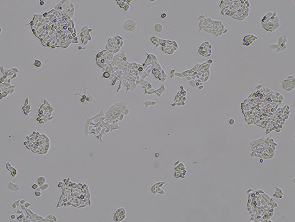
H520 is a hypotriploid human lung squamous carcinoma cell line with p53 suppression, keratin positivity, and strong tumorigenicity in nude mice.
H520 is a human lung squamous cell carcinoma (LSCC) cell line established from a primary lung tumor in a Caucasian male patient in 1982. These adherent epithelial cells exhibit epithelial morphology and the capacity to form colonies in soft agar, indicative of anchorage‑independent growth. Cytogenetically, H520 is hypotriploid with a modal chromosome count of ~58, and demonstrates chromosomal instability typical of malignant lung tumors. Tumor suppressor gene TP53 harbors a truncating mutation (p. Trp146Ter), and the line expresses low levels of p53 mRNA, keratin, and vimentin. H520 displays traits of epithelial‑to‑mesenchymal transition with reduced E‑cadherin, increased N‑cadherin and vimentin, and heightened FAK phosphorylation. SOX2‑OT non‑coding RNA is highly overexpressed, linked to increased migratory and invasive behavior in vitro. The line shows consistent tumorigenicity in xenograft models and displays molecular signatures associated with clinical LSCC. This line serves as a critical model for studying this aggressive NSCLC subtype.
| Product Code | H520; H-520; NCI-HUT-520; NCIH520 |
| Species | Human |
| Cat.No | ABC-TC527S |
| Product Category | Tumor Cell Lines |
| Size/Quantity | 1 vial |
| Cell Type | Epithelial |
| Growth Mode | Adherent |
| Shipping Info | Dry Ice |
| Growth Conditions | 37 ℃, 5% CO2 |
| Source Organ | Lung |
| Disease | Squamous Cell Cancer |
| Biosafety Level | 1 |
| Storage | Liquid Nitrogen |
| Product Type | Human Lung Cancer Cell Lines |
H520 cells are extensively used in lung cancer research, particularly for studies of squamous cell carcinoma biology, novel drug development, and biomarker discovery. The cell line serves as a valuable platform for studying tumor-stroma interactions, cancer stem cell properties, and preclinical assessment of radiation sensitivity in LSCC. Its EMT phenotype makes it ideal for studying the biological impact of molecules that modulate E‑cadherin/N‑cadherin switching or FAK signaling. H520 xenografts support in vivo testing of tumor suppressive genes or therapeutic candidates. The high SOX2‑OT expression supports mechanistic studies of oncogenic non‑coding RNA in invasion, and knockdown experiments reduce H520 cell migration and invasion in vitro. The molecular profile of H520 also makes it suitable for research on oxidative stress response and metabolic reprogramming in squamous carcinomas.
When you publish your research, please cite our product as “AcceGen Biotech Cat.# XXX-0000”. In return, we’ll give you a $100 coupon. Simply click here and submit your paper’s PubMed ID (PMID).