



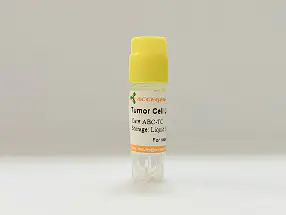
For research use only
| Cat No. | ABC-TC0357 |
| Product Type | Human Uterine Cancer Cell Lines |
| Cell Type | Epithelial-like |
| Species | Human |
| Growth Conditions | 37 ℃, 5% CO2 |
| Source Organ | Cervix |
| Disease | Cervix Cancer |
| Product Code | HeLa-P3, HeLaP3, Hela P3 |
Cervical cancer
HeLa P3 is a subline of the original HeLa cell line, derived from human cervical carcinoma cells. This cell line retains key characteristics of parental HeLa cells, including epithelial morphology and robust growth under standard conditions. It is frequently used in virology and cancer biology due to its high susceptibility to viral infection and stable karyotype. Studies have used this subline to investigate gene expression regulation. Its reliable behavior in vitro makes it suitable for drug screening, transfection, and apoptosis assays. The cells undergo rigorous screening and isolation procedures, and are rigorously tested to ensure they are free of contamination from HIV-1, HBV, HCV, Syphilis, Mycoplasma, Fungi, Yeast, and Bacteria.
| Product Code | HeLa-P3, HeLaP3, Hela P3 |
| Species | Human |
| Cat.No | ABC-TC0357 |
| Product Category | Tumor Cell Lines |
| Size/Quantity | 1 vial |
| Cell Type | Epithelial-like |
| Shipping Info | Dry Ice |
| Growth Conditions | 37 ℃, 5% CO2 |
| Source Organ | Cervix |
| Disease | Cervix Cancer |
| Biosafety Level | 1 |
| Storage | Liquid Nitrogen |
| Product Type | Human Uterine Cancer Cell Lines |
HeLa P3 cell line is excellent for studying gene regulation, mitochondrial function, viral infection, and cancer metabolism. Their robust transfection efficiency makes them suitable for CRISPR, RNAi, and reporter assays. Their well-characterized genetic background further enhances reproducibility across diverse experimental designs. The cell line supports mechanistic studies in tumor biology, cell proliferation, apoptosis, and signal transduction pathways.
When you publish your research, please cite our product as “AcceGen Biotech Cat.# XXX-0000”. In return, we’ll give you a $200 coupon. Simply click here and submit your paper’s PubMed ID (PMID).