



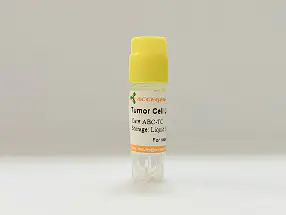
For research use only
| Cat No. | ABC-TC0429 |
| Product Type | Human Colon Cancer Cell Lines |
| Cell Type | Epithelial |
| Species | Human |
| Growth Conditions | 37 ℃, 5% CO2 |
| Source Organ | Colon |
| Disease | Colon Adenocarinoma |
| Product Code | HT-29/219; HT29219 |
HT-29/219, a human colon carcinoma cell line, ideal for cancer research, studying tumor growth in agar and in vivo models, and colorectal cancer therapies.
HT-29/219 is a human colorectal adenocarcinoma cell line and a subclone of the parent HT-29 line, originally derived from the primary tumor of a 44-year-old Caucasian female patient. It exhibits an epithelial-like morphology and grows as adherent monolayers under standard culture conditions. Cytogenetically, HT-29/219 has a hypertriploid karyotype, similar to its parent, indicative of chromosomal aberrations characteristic of malignant cells. This line retains key tumorigenic properties, including the ability to grow in soft agar and form tumors in nude mice, making it a robust model of colorectal cancer. HT-29/219 cells have been studied for lipid metabolism and fatty acid uptake. As a malignant tumor model, HT-29/219 cell line supports investigations into colorectal cancer biology, tumor metabolism, and therapeutic responses. The cells undergo rigorous screening and isolation procedures, and are rigorously tested to ensure they are free of contamination from HIV-1, HBV, HCV, Syphilis, Mycoplasma, Fungi, Yeast, and Bacteria.
| Product Code | HT-29/219; HT29219 |
| Species | Human |
| Cat.No | ABC-TC0429 |
| Product Category | Tumor Cell Lines |
| Size/Quantity | 1 vial |
| Cell Type | Epithelial |
| Growth Mode | Adherent |
| Shipping Info | Dry Ice |
| Growth Conditions | 37 ℃, 5% CO2 |
| Source Organ | Colon |
| Disease | Colon Adenocarinoma |
| Biosafety Level | 1 |
| Storage | Liquid Nitrogen |
| Product Type | Human Colon Cancer Cell Lines |
HT-29/219 cells are used as an in vitro model of human colorectal adenocarcinoma for studying tumor cell proliferation, lipid metabolism, and drug response mechanisms. They support research into metabolic pathways relevant to cancer cell growth and chemotherapeutic sensitivity, as well as investigations of signaling that regulates colorectal tumor behavior.
When you publish your research, please cite our product as “AcceGen Biotech Cat.# XXX-0000”. In return, we’ll give you a $200 coupon. Simply click here and submit your paper’s PubMed ID (PMID).