



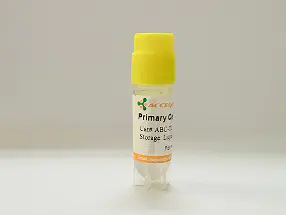
For research use only
| Cat No. | ABC-TC3422 |
| Product Type | Hepatic Cells |
| Cell Type | Liver Cell |
| Species | Human |
| Growth Conditions | 37 ℃, 5% CO2 |
| Source Organ | Liver |
| Disease | Normal |
| Storage | Liquid Nitrogen |
Fetal liver CD36+ Early Erythroid Progenitor cells are derived from FL-CD34+ cells in culture.
Human Fetal Liver Cells CD36+ Early Erythroid Progenitor Cells are a specific cell subpopulation obtained through isolation from fetal liver tissue followed by specialized culture and sorting methods. Morphologically, these cells exhibit immature erythroid characteristics, with small cell size, scanty cytoplasm, dense chromatin in the nucleus, and a high nucleus-to-cytoplasm ratio. CD36 serves as a key surface marker for this developmental stage and is broadly known to participate in lipid uptake, cell adhesion, and inflammatory signaling, although within the erythroid lineage it primarily functions as an indicator of early-stage differentiation. These cells support fetal liver cell culture and facilitate human CD36+ erythroid research on early erythropoiesis and lineage-specific differentiation. Each lot undergoes rigorous screening and isolation procedures, and is rigorously tested to ensure it is free of contamination from HIV-1, HBV, HCV, Syphilis, Mycoplasma, Fungi, Yeast, and Bacteria.
| Product Code | Human Fetal Liver CD36+ Early Erythroid Progenitors, Fetal Liver CD36+ Erythroid Cells, FL CD36+ Progenitors, Early Erythroid Precursor Cells, CD36 Positive Erythroid Progenitors |
| Species | Human |
| Cat.No | ABC-TC3422 |
| Product Category | Primary Cells |
| Size/Quantity | 1 vial |
| Cell Type | Liver Cell |
| Shipping Info | Dry Ice |
| Growth Conditions | 37 ℃, 5% CO2 |
| Source Organ | Liver |
| Disease | Normal |
| Biosafety Level | 1 |
| Storage | Liquid Nitrogen |
| Product Type | Hepatic Cells |
| Quality Control | All cells test negative for mycoplasma, bacteria, yeast, and fungi. |
Human Fetal Liver Cells CD36+ Early Erythroid Progenitor Cells can be used to study the development and differentiation mechanisms of erythroid cells. They can also be used as cell models for drug screening and toxicity testing to evaluate the effects of drugs on erythroid cell development, predict possible adverse blood reactions caused by drugs, and provide an important basis for the evaluation of drug safety and efficacy.
When you publish your research, please cite our product as “AcceGen Biotech Cat.# XXX-0000”. In return, we’ll give you a $200 coupon. Simply click here and submit your paper’s PubMed ID (PMID).