

For research use only
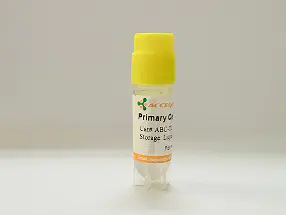
| Cat No. | ABC-TC3721 |
| Product Type | Nervous Cells |
| Cell Type | Neuron |
| Species | Human |
| Growth Conditions | 37 ℃, 5% CO2 |
| Source Organ | Brain |
| Disease | Normal |
| Storage | Liquid Nitrogen |
Utilize Human Neural Progenitor Cells to model CNS development, glial and neuronal differentiation, and therapeutic screening for neural disorders.
Human Neural Progenitor Cells (hNPCs) are isolated from human fetal brain tissue. These cells possess self-renewal capacity and multipotency, enabling them to differentiate into multiple neural lineages. These cells can give rise to neurons, astrocytes, and oligodendrocytes, making them valuable for studying neurodevelopment and modeling neurological disorders. hNPCs typically express characteristic neural stem cell markers including Nestin, SOX1, SOX2, and PAX6, which maintain their proliferative and undifferentiated state. Morphologically, hNPCs appear as small, bipolar or multipolar cells with a high nucleus-to-cytoplasm ratio, and they grow in adherent monolayers or neurosphere culture. Their plasticity and differentiation potential have positioned hNPCs as crucial tools for investigating neurodegenerative diseases like Parkinson’s disease and Alzheimer’s disease, as well as for screening potential neuroprotective compounds. Recent advances have support ongoing research into hNPC-derived dopaminergic neurons for Parkinson’s therapy. Neural progenitor cells, identified by specific neural progenitor cell markers, serve as foundational models for the development of human neuronal cell lines, enabling deeper insights into neural differentiation and disease modeling.
| Product Code | Human Neural Progenitor Cells, NPCs Human, Human Neural Stem/Progenitor Cells, hNPCs, CNS Progenitor Cells, Neuroepithelial Progenitors |
| Species | Human |
| Cat.No | ABC-TC3721 |
| Product Category | Primary Cells |
| Size/Quantity | 1 vial |
| Cell Type | Neuron |
| Growth Mode | Adherent |
| Shipping Info | Dry Ice |
| Growth Conditions | 37 ℃, 5% CO2 |
| Source Organ | Brain |
| Disease | Normal |
| Biosafety Level | 1 |
| Storage | Liquid Nitrogen |
| Product Type | Nervous Cells |
| Key Features | -Backed by AcceGen advanced technology |
| Quality Control | All cells test negative for mycoplasma, bacteria, yeast, and fungi. |
Human Neural Progenitor Cells (hNPCs) can be used to study the process of neural development, the mechanism of neurodegenerative diseases (such as Alzheimer’s disease and Parkinson’s disease), or explore the molecular pathways of neural damage and repair. In addition, their in vitro culture system provides an ideal model for revealing abnormal human brain development or neurodevelopmental or psychiatric disorders (such as autism and schizophrenia).
When you publish your research, please cite our product as “AcceGen Biotech Cat.# XXX-0000”. In return, we’ll give you a $200 coupon. Simply click here and submit your paper’s PubMed ID (PMID).
Xie T, Yuan J, Mei L, Li P, Pan R. Hyperoside ameliorates TNF‑α‑induced inflammation, ECM degradation and ER stress‑mediated apoptosis via the SIRT1/NF‑κB and Nrf2/ARE signaling pathwaysin vitro. Molecular Medicine Reports. 2022;26(2). doi:10.3892/mmr.2022.12776
Reis RSD, Susa S, Wagner MCE, Ayyavoo V. Human immunodeficiency virus (HIV-1) targets astrocytes via Cell-Free and Cell-Associated infection. Journal of Integrative Neuroscience. 2024;23(9):172. doi:10.31083/j.jin2309172
Kim YJ, Lim JH, Kim ER. Targeting the hypothalamic MC4 receptor: A novel approach to senolytic therapy? Medical Hypotheses. 2024;195:111551. doi:10.1016/j.mehy.2024.111551